Can Perimenopause Cause Sudden Skin Sensitivity?

Table of Contents
- Can Perimenopause Cause Sudden Skin Sensitivity? Yes, and Here's Why
- Sensitive Skin Out of Nowhere: Why Your Face Freaked Out at 43
- Perimenopause Itchy Skin: When the Itch Isn't Just Dryness
- Skin Feels Like It Is Burning Menopause: What's Actually Happening
- The Perimenopause Skin Care Routine That Won't Wind You Up
- Ingredients Worth Knowing: Salicylic Acid and Copper Peptides
- When to See a Professional About Sudden Skin Changes
- Conclusion: Your Skin Isn't Broken, It's Just Hormonal
- Frequently Asked Questions
Last Updated: October 9, 2026
Can Perimenopause Cause Sudden Skin Sensitivity? Yes, and Here's Why
Yes, perimenopause can cause sudden skin sensitivity. When oestrogen levels start swinging, your skin's barrier gets thinner and less able to defend itself. Things that never bothered you before, like a hot shower or your usual moisturiser, can suddenly sting. At Dead Tired Club, we hear this constantly from women in their forties who feel like their face has been swapped overnight.
The shift usually shows up as stinging, itching, redness or a burning feeling. Your barrier is weaker, so irritants get in more easily.
Below, we'll cover why this happens, how to calm it down, and which ingredients are worth your money.
Sensitive Skin Out of Nowhere: Why Your Face Freaked Out at 43
One day your skin is fine. The next, your regular cleanser feels like lemon juice on a paper cut. Welcome to the club nobody asked to join.
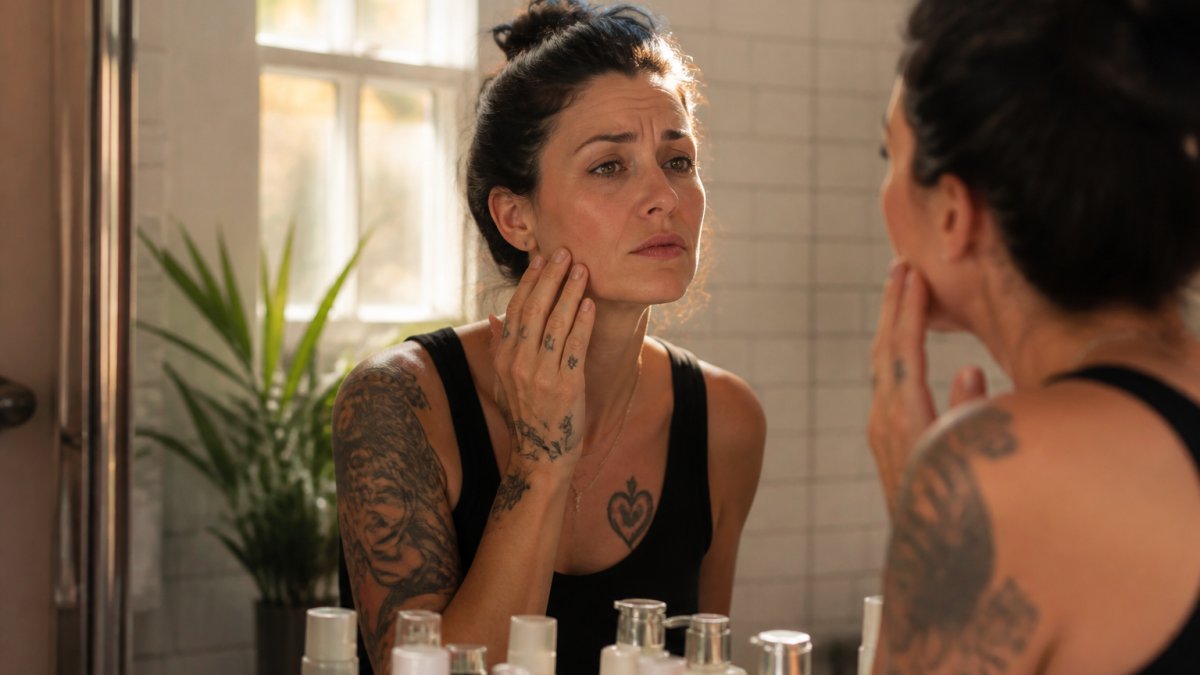
Oestrogen plays a big role in keeping skin plump and resilient. As it drops, several things happen at once:
- The skin barrier gets thinner and loses moisture faster
- Collagen production slows down
- Oil flow becomes unpredictable
- Blood vessels react more easily, so flushing is common
Add in stress, poor sleep and a glass of wine, and your face stages a full protest.
Sensitive skin is skin with a weakened barrier that reacts to things it used to tolerate. That's the whole story in one line.
The fix isn't a fancy ten-step routine. It's fewer products, gentler ones, and patience.
Oestrogen, Collagen and the Skin Barrier Connection
Oestrogen supports collagen, elastin and the lipids that hold your barrier together. When it falls, all three take a hit.
The Australasian Menopause Society's resources on menopause explains that falling oestrogen affects skin thickness, moisture and healing. Less collagen means thinner skin. Thinner skin means irritants get through faster.
So when you ask "can perimenopause cause sudden skin sensitivity," the answer sits in your hormones, not your new face wash.
Perimenopause Itchy Skin: When the Itch Isn't Just Dryness
Perimenopause itchy skin often isn't about dryness at all. It's your nerve endings reacting to a barrier that's lost its padding.
You might notice itching on your face, neck, chest or arms, often at night. Scratching makes it worse. So does a hot shower.
What helps:
- Lukewarm water, not hot
- A fragrance-free moisturiser applied within minutes of washing
- Loose cotton clothing
- A humidifier in the bedroom if the air is dry
What makes it worse:
- Wool directly on itchy skin
- Long, steamy showers
- Scrubbing, exfoliating or "detoxing" your skin
If the itch comes with a rash, swelling or spreads fast, get it checked. That's not a barrier issue.
Skin Feels Like It Is Burning Menopause: What's Actually Happening
When skin feels like it is burning menopause-style, it usually means your barrier is compromised and your nerve endings are on high alert. It's called sensory reactivity, and it's common.
It often follows a trigger. A new serum. A retinol you used twice. Sun exposure. Even stress.
Calm it down like this:
- Stop all actives for a week. No acids, no retinol, no vitamin C.
- Cleanse with lukewarm water only, or a cream cleanser.
- Moisturise with something plain and fragrance-free.
- Protect with SPF every morning.
- Reintroduce one product at a time, a week apart.
The Perimenopause Skin Care Routine That Won't Wind You Up
A perimenopause skin care routine should be boring. Boring is the goal. Four steps, done daily, beats ten steps done in a panic.
Here's the routine we'd build:
| Step | Product Type | Frequency | Why It Helps |
|---|---|---|---|
| 1 | Cream or gel cleanser | Twice daily | Removes grime without stripping |
| 2 | Barrier moisturiser | Twice daily | Rebuilds lipids and holds water in |
| 3 | BHA serum | Once daily or every second day | Clears hormonal congestion |
| 4 | SPF 50+ | Every morning | Prevents pigmentation and further damage |
That's it. No toners, no essences, no twelve-step theatre.
What to Strip Back, and What to Keep
Strip back anything with fragrance, essential oils, alcohol or physical scrubs. Your skin doesn't need them right now.
Keep the boring stuff: a gentle cleanser, a barrier cream, SPF, and one targeted active.
If your skin is oily and congested, keep a BHA. If it's dry and lined, keep a peptide. Don't keep both at full strength on day one.
Ingredients Worth Knowing: Salicylic Acid and Copper Peptides
Two ingredients earn their place in a perimenopausal routine: salicylic acid and copper peptides. One clears congestion. The other supports collagen.
Salicylic acid is an oil-soluble exfoliant. It gets inside the pore to loosen the build-up behind hormonal breakouts, rather than just scrubbing the surface. Our Got Bumps? BHA Blemish Serum was built for exactly this: the jawline and chin congestion that turns up in your forties, decades after you thought that chapter was closed. One pump on clean skin, once a day. Start every second day if BHAs are new to you.

Copper peptides are a different job entirely. GHK-Cu is a copper peptide that supports your skin's own collagen and elastin, so skin looks firmer over time. Our Got Lines? Copper Peptide Serum pairs it with CoQ10 and niacinamide for antioxidant backup and more even tone. It's the peptide route for anyone who wants more than a surface polish.
When to See a Professional About Sudden Skin Changes
See a doctor or dermatologist if your skin changes come with any of these:
- A rash that spreads quickly or blisters
- Swelling of the face, lips or eyelids
- Skin that reacts to everything, including water
- Burning that doesn't settle after two weeks of gentle care
- New moles, sores that won't heal, or bleeding
Most perimenopausal skin sensitivity settles with a simpler routine. Some of it needs a proper look. Knowing the difference matters more than guessing.
Conclusion: Your Skin Isn't Broken, It's Just Hormonal
Your skin isn't broken. It's hormonal, and it's responding to a real shift in your body. That's not a personal failing, and it's not something a $200 cream fixes overnight.
At Dead Tired Club, we make gear and skincare for women who are done with beige wellness advice. Our Got Bumps? BHA Blemish Serum handles the hormonal breakouts, and our Got Lines? Copper Peptide Serum supports the collagen your skin is quietly losing. Both are $49, both do one job well, and neither lectures you about drinking more water.
Join Dead Tired and get skincare that speaks to where you actually are.
Frequently Asked Questions
Can perimenopause cause sudden skin sensitivity?
Yes. Falling oestrogen levels during perimenopause reduce collagen production and weaken the skin barrier, which can make skin react to products and temperatures it previously handled fine. Many women notice stinging, redness or tightness for the first time in their late thirties to early fifties. It's a common hormonal shift, not a sign your skin is permanently damaged, and a gentler perimenopause skin care routine usually settles things down over a few weeks.
Why does my skin suddenly feel like it is burning during menopause?
That burning sensation often comes from a compromised skin barrier plus fluctuating oestrogen, which affects nerve sensitivity in the skin. Hot flushes can also raise facial temperature and trigger redness. Strip your routine back to a gentle cleanser, a barrier-supporting moisturiser and SPF, and pause strong actives until things calm down. If burning continues or comes with a rash, speak to a health professional.
Can hormonal changes make your skin itchy or tender?
They can. Perimenopause itchy skin is commonly linked to reduced oil production, a thinner barrier and lower oestrogen, all of which let irritants in more easily. Itchiness often shows up on the face, neck and jawline. Fragrance-free moisturiser, lukewarm water and avoiding harsh scrubs help. Persistent or severe itching deserves a check-up, because it can also signal other conditions unrelated to hormones.
How long can perimenopause-related skin sensitivity last?
There's no fixed timeline. Some women notice sensitivity for a few months during hormonal swings, while others deal with it on and off for several years across perimenopause. It usually eases once hormones stabilise, though the skin barrier needs consistent care in the meantime. Keeping a simple, consistent perimenopause skin care routine and introducing new products one at a time makes it easier to spot what helps and what flares you up.
If symptoms are hitting you hard, it's always smart to speak to an expert via our friends at UnPause.com.au. Dead Tired Club does not provide medical advice.