Non-Gym Movement Ideas for Perimenopause That Work

Table of Contents
- Non-Gym Movement Ideas for Perimenopause: Why Your Body Wants You to Move
- Low-Impact Exercise for Perimenopause: Dance, Swim, Stretch, Repeat
- Strength Exercises at Home for Perimenopause: Your Living Room Is the Gym
- Walking During Perimenopause: The Most Underrated Movement There Is
- Exercise When Tired During Perimenopause: How to Move Without Burning Out
- How to Sneak Movement Into Your Day Without Calling It a Workout
- What to Ignore: Bad Advice About Movement in Midlife
- Conclusion: Move Your Way, On Your Terms
- Frequently Asked Questions
Last Updated: October 7, 2026
Non-Gym Movement Ideas for Perimenopause: Why Your Body Wants You to Move
Non-gym movement is any physical activity that happens outside a gym, class or formal workout: dancing in your kitchen, walking to the shops, digging in the garden, carrying the groceries. For perimenopausal women, it might be the most sustainable way to move, because it fits into a life that is already full.
At Dead Tired Club, we hear from women who are exhausted, wired, and completely over being told to "just do a spin class". So this guide skips the gym entirely. Below, we'll show you how to move your way, on your terms, without adding another chore to the list.
healthdirect's guide to physical activity notes that regular movement helps with sleep, mood, bone strength and heart health. That matters more, not less, as oestrogen shifts.
Low-Impact Exercise for Perimenopause: Dance, Swim, Stretch, Repeat
Low-impact exercise for perimenopause means movement that raises your heart rate without hammering your joints. Think dancing, swimming, cycling, stretching and brisk walking. Joints get kinder treatment, and you still get the mood and sleep benefits.
Dancing Like Nobody's Watching (Because Nobody Is)
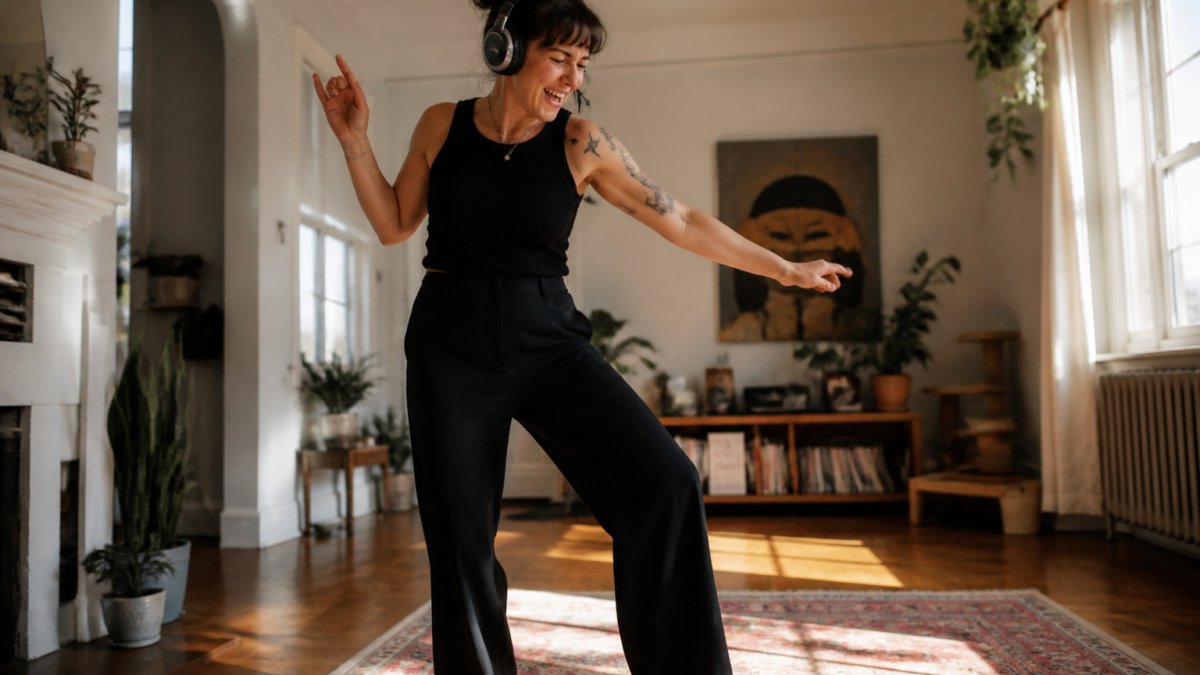
Dancing is the most underrated low-impact exercise going. It's cardio, it's balance work, and it's fun, which is the bit most wellness advice forgets.
- Put on three songs and dance badly in the kitchen
- Follow a free online dance class in your living room
- Go out and see live music, and dance like you did at 22
That last one isn't a joke. Live music and dancing lift mood, reduce stress and get you moving for hours without noticing.
Swimming, Cycling, and Other Joint-Friendly Options
Swimming takes pressure off hips, knees and ankles while working your whole body. Cycling, whether on a real bike or a stationary one, builds leg strength without impact. Both are easy to scale: go harder on a good day, gentler on a rough one.
If your joints are complaining, water is your friend. If your energy is flat, a slow pedal still counts.
Strength Exercises at Home for Perimenopause: Your Living Room Is the Gym
Strength exercises at home for perimenopause build and protect muscle, which matters because muscle mass declines faster as oestrogen drops. You don't need a rack of dumbbells. You need resistance and consistency.
Try these at home, two or three times a week:
- Sit-to-stands from a dining chair, 10 reps
- Wall push-ups, then progress to kitchen-bench push-ups
- Calf raises while the kettle boils
- Glute bridges on the living room floor
- Carrying shopping bags in from the car, one in each hand
the Australian Government's physical activity guidelines recommend muscle-strengthening activity on at least two days each week. Two days. That's it. Start there.
Walking During Perimenopause: The Most Underrated Movement There Is
Walking during perimenopause is the single easiest way to hit recommended activity levels, and it costs nothing. It also happens to be the movement most women stick with, because it doesn't require gear, a booking or a shower afterwards.
The trick is to stop calling it exercise. Walk to the coffee shop. Walk the long way to the bus. Walk with a friend and talk the whole time. Ten minutes here and there adds up faster than you'd think.
If you want it to count as cardio, pick up the pace for a few minutes, then ease back. Repeat. That's interval training, and you did it in flip-flops.
Exercise When Tired During Perimenopause: How to Move Without Burning Out
Exercise when tired during perimenopause should be gentle, short and flexible. On low-energy days, the goal is not to push through. It's to move a little, then stop.
Here's a rough guide:
| How you feel | What to do | How long |
|---|---|---|
| Wrecked | Stretch, or a slow walk | 5-10 minutes |
| Flat but functional | Walk, gentle swim, easy cycle | 15-20 minutes |
| Good | Dance, strength, brisk walk | 20-40 minutes |
| Great | Whatever you fancy | As long as it feels good |
Fatigue is a real perimenopause symptom, not laziness. Some days you'll have it, some days you won't. Matching the movement to the day beats forcing a plan that ignores how you actually feel.
How to Sneak Movement Into Your Day Without Calling It a Workout
Sneaking movement into your day works because it removes the two biggest barriers: time and motivation. You're not blocking out an hour. You're just... moving.
Try these:
- Take calls standing up, or pacing
- Park further from the entrance
- Do calf raises while the kettle boils
- Dance while you clean
- Walk to the letterbox, twice
- Stretch during ad breaks
- Take the stairs when it's only one flight
None of these feel like exercise. All of them count.
What to Ignore: Bad Advice About Movement in Midlife
Bad advice about movement in midlife usually comes wrapped in shame. Ignore anything that tells you it's too late, that you need to "bounce back", or that a specific workout will fix your hormones.
What to ignore:
- "You're too old to start." Untrue. Muscle responds to training at any age.
- "No pain, no gain." Pain is a signal, not a badge.
- "You must do HIIT or it doesn't count." Gentle movement counts.
- "You need to lose weight first." Movement is for how you feel, not a number.
- Anything sold with a side of guilt.
Move because it makes you feel more like yourself. That's the whole point.
Conclusion: Move Your Way, On Your Terms
Finding movement you actually enjoy is the difference between a habit that sticks and one you abandon by February. Dance, walk, swim, lift a bag of groceries. It all counts.
At Dead Tired Club, we make feel-good gear for women who are done with beige wellness and unrealistic ideals. Our range is designed for the reality of midlife, not the fantasy version. Come see what we're about, and join a community that gets it.
Frequently Asked Questions
What are some ways to exercise during perimenopause without going to the gym?
You've got more options than you think. Dancing in your kitchen, walking around the block, swimming laps, doing bodyweight strength exercises at home, or even just stretching while you watch telly all count. The key is picking things that feel doable on the days you're wrecked and slightly ambitious on the days you're not. Consistency beats intensity every single time.
Can walking count as exercise during perimenopause?
Absolutely. Walking during perimenopause is one of the most accessible forms of movement you can do. It supports cardiovascular health, helps with mood, and doesn't require any equipment beyond decent shoes. A brisk 30-minute walk most days can make a real difference to how you feel, both physically and mentally. If you're exhausted, even a slow 10-minute wander around the block counts.
How can I stay active when I feel too tired to move?
Exercise when tired during perimenopause doesn't have to mean a full workout. Try the two-minute rule: commit to just two minutes of movement, whether that's stretching, walking to the letterbox, or dancing to one song. Often you'll keep going once you start. On genuinely rough days, gentle movement like slow stretching or a short walk is enough. Rest is also valid.
Is gentle movement actually useful during perimenopause, or do I need to push harder?
Gentle movement is genuinely useful. Low-impact exercise for perimenopause, like swimming, walking, or yoga, supports joint health, mood, and sleep without wiping you out. You don't need to smash yourself to see benefits. Mixing gentler days with some strength work at home gives you the best of both. Listen to your body, not someone else's fitness plan.
If symptoms are hitting you hard, it's always smart to speak to an expert via our friends at UnPause.com.au. Dead Tired Club does not provide medical advice.