Perimenopause Pain Management: A Real Guide

Table of Contents
- Why Perimenopause Pain Hits Different
- Managing Perimenopause Joint Pain
- Perimenopause Muscle Pain: What's Actually Happening
- Dealing with Joint Stiffness During Perimenopause
- Skincare and Confidence: Your Secret Pain Management Tool
- When to Seek Help for Perimenopause Pain
- Your Perimenopause Pain Management Plan
- Frequently Asked Questions
Last Updated: October 8, 2026
Why Perimenopause Pain Hits Different
Perimenopause pain management isn't just about tolerating discomfort. It's about understanding why your body feels like it's staging a rebellion and then taking back control.
The truth is, perimenopause pain hits different because your hormones are in freefall. As oestrogen levels drop, your body loses one of its most powerful anti-inflammatory agents. That means joint pain, muscle soreness, and stiffness that didn't exist five years ago suddenly become your unwelcome companions.
This isn't weakness. This isn't ageing. This is biology.
Perimenopause pain management means combining practical strategies, movement, skincare, sleep, and confidence to reclaim your physical comfort and mental space.
Here's what you need to know: your pain is real, it's temporary, and it's manageable.
Managing Perimenopause Joint Pain
Perimenopause joint pain happens because falling oestrogen levels reduce the fluid in your joints and increase inflammation throughout your body. Your knees, hips, hands, and shoulders are usually first to complain.
The good news? Movement is your best friend here. Not aggressive exercise, gentle, consistent movement.
What actually works for perimenopause joint pain:
- Start with low-impact movement like walking, swimming, or cycling three to four times a week
- Warm up properly before any activity; cold joints are stiff joints
- Stretch after movement when muscles are warm, holding each stretch for 20-30 seconds
- Try yoga or Pilates, which combine strength and flexibility in ways that protect joints
- Use heat therapy on sore joints for 15-20 minutes before activity
- Stay hydrated; dehydration makes joint pain worse
- Consider resistance training twice a week to build muscle around joints (muscle supports joint stability)
The mistake most women make is stopping movement entirely. That makes everything worse. Your joints need gentle, regular use to stay lubricated and functional.
Anti-inflammatory foods help too. Think fatty fish, berries, leafy greens, and nuts. These reduce systemic inflammation, which takes pressure off your joints.
Sleep matters more than you'd think. When you're not sleeping properly, your body can't repair tissue damage, and inflammation increases. That's why perimenopause joint pain often feels worse when you're exhausted.
Perimenopause Muscle Pain: What's Actually Happening
Perimenopause muscle pain feels like you've been hit by a truck after doing nothing particularly strenuous. That's because oestrogen helps your muscles recover faster and reduces muscle soreness.
Without it, your muscles take longer to repair, and delayed-onset muscle soreness (DOMS) becomes more pronounced. A workout that used to feel fine now leaves you sore for days.
Why your muscles hurt during perimenopause:
- Oestrogen regulates muscle protein synthesis; lower oestrogen means slower repair
- Inflammation increases, making muscle soreness feel more intense
- Muscle mass naturally declines without targeted strength work
- Sleep disruption prevents proper muscle recovery overnight
- Dehydration is common during perimenopause and worsens muscle soreness
The fix isn't to stop exercising. It's to be smarter about how you exercise.
Progressive resistance training (building strength gradually) is your best tool for perimenopause muscle pain. It signals your body to maintain muscle mass and improves how your muscles handle stress. Start light, progress slowly, and give yourself proper recovery days between sessions.
Magnesium is genuinely helpful here. It supports muscle function and relaxation. Many women find magnesium helps both muscle soreness and sleep quality, which creates a positive cycle.
Foam rolling or gentle massage after workouts can reduce muscle soreness. The key word is gentle, aggressive foam rolling when you're already sore just creates more inflammation.
Dealing with Joint Stiffness During Perimenopause
Joint stiffness during perimenopause is particularly frustrating because it often hits first thing in the morning. You wake up feeling like the Tin Man before he got oiled.
This happens because joint fluid decreases with falling oestrogen, and inflammation increases overnight when you're not moving. Your joints literally stiffen up during sleep.
Practical strategies for joint stiffness:
- Move gently for 10-15 minutes immediately after waking; don't force it, just mobilise
- Take a warm shower or bath to loosen joints before you start your day
- Do gentle stretching or tai chi in the morning
- Avoid staying in one position too long; set hourly reminders to stand and move
- Keep your environment warm; cold makes stiffness worse
- Wear supportive shoes; cheap, unsupportive footwear increases joint stress
- Consider compression garments if stiffness is severe
The real game-changer for many women is consistency. Morning stiffness improves dramatically when you move regularly throughout the day and maintain good sleep. It's not one magic fix, it's the combination.
Skincare and Confidence: Your Secret Pain Management Tool
Here's what nobody tells you: how you feel about yourself directly affects how much pain bothers you.
When your skin is breaking out from hormonal shifts, when you're exhausted, when you don't recognise yourself in the mirror, physical pain feels worse. It all compounds.
Skincare during perimenopause isn't vanity. It's pain management.
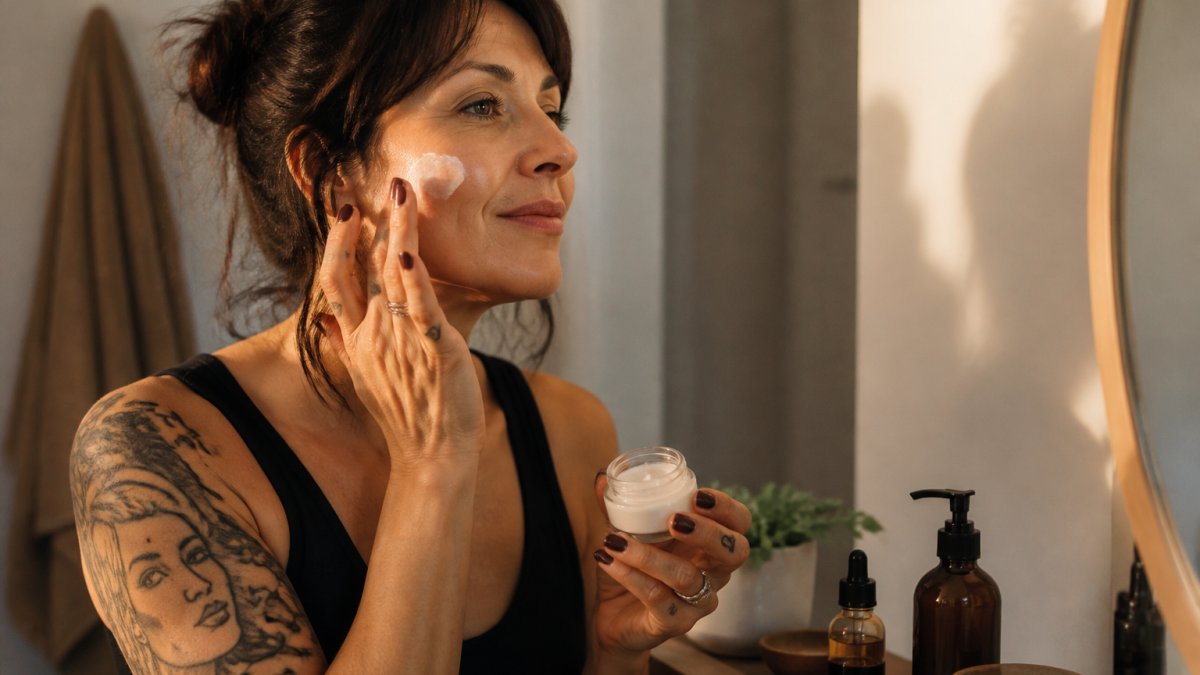
Taking time to care for your skin is a concrete act of self-care that directly improves your mood and confidence. When you feel good about how you look, you're more likely to move, to engage with your body positively, and to manage pain more effectively.
Dead Tired Club products are designed specifically for women navigating perimenopause. They address the skin chaos that comes with hormonal shifts, the breakouts, the dryness, the texture changes, without pretending everything is fine or marketing unrealistic beauty standards.
When your skin feels better, you feel better. When you feel better, pain becomes less central to your experience. That's not psychology, that's physiology.
The confidence piece matters too. Women who feel good about themselves tend to move more, sleep better, and report lower pain levels. It's not because the pain disappeared. It's because they're not fighting their bodies on every front simultaneously.
When to Seek Help for Perimenopause Pain
Most perimenopause pain management can be handled with the strategies above. But some pain warrants professional support.
Seek help if:
- Pain is severe enough to interrupt sleep regularly
- You're unable to perform basic daily activities
- Pain worsens dramatically or suddenly changes character
- You have swelling, redness, or warmth around joints
- Pain is concentrated in one joint only
- You're experiencing numbness or tingling alongside pain
- Pain doesn't improve with movement and rest over several weeks
A GP can rule out other conditions (rheumatoid arthritis, thyroid issues, vitamin deficiencies) that sometimes emerge during perimenopause. They can also discuss whether hormone therapy might help, though that's a personal decision with pros and cons.
A physiotherapist is genuinely useful for perimenopause pain. They can assess your movement patterns, identify where you're compensating for pain, and build a targeted exercise programme.
Don't suffer silently thinking this is just what perimenopause is. Some pain is normal. Severe pain that stops you living your life is not.
Your Perimenopause Pain Management Plan
Perimenopause pain management works best when you combine multiple approaches rather than relying on one solution.
Build your plan around these foundations:
| Strategy | Frequency | Why It Matters |
|---|---|---|
| Gentle movement | Daily or most days | Reduces stiffness, supports joint health |
| Strength training | 2-3 times weekly | Protects joints and maintains muscle |
| Sleep prioritisation | Every night | Enables tissue repair and reduces inflammation |
| Hydration | Throughout the day | Maintains joint fluid and reduces soreness |
| Skincare routine | Daily | Builds confidence and supports wellbeing |
| Anti-inflammatory foods | Most meals | Reduces systemic inflammation |
| Heat therapy | As needed | Loosens stiff joints before activity |
Start with one or two changes and build from there. Don't overhaul everything at once, that's a recipe for abandoning the plan within a month.
Track what actually helps. Perimenopause pain management is personal. What works brilliantly for your friend might not move the needle for you. Notice what reduces your pain, what improves your sleep, what makes you feel more like yourself.
Dead Tired Club exists because we know this phase is real and it's hard. Our products are built for women who refuse to pretend everything is fine, who want to feel good without buying into unrealistic beauty standards, and who deserve support that actually speaks to their reality.
The goal isn't to eliminate pain entirely. It's to manage it well enough that you can keep living, moving, working, laughing, maybe even dancing if you fancy it. Pain shouldn't stop you from being yourself.
If symptoms are hitting you hard, it's always smart to speak to an expert via our friends at UnPause.com.au. Dead Tired Club does not provide medical advice.
Research shows that oestrogen plays a significant role in pain perception and inflammation management. According to peer-reviewed research on oestrogen and musculoskeletal pain, hormonal fluctuations during midlife transitions directly affect joint and muscle comfort.
The importance of movement during hormonal transitions is well-documented. Exercise guidelines for midlife women emphasise that consistent, gentle physical activity remains one of the most effective strategies for managing discomfort and maintaining overall health.
Frequently Asked Questions
Can perimenopause really cause joint and muscle pain?
Yes. Dropping oestrogen levels during perimenopause affect how your body manages inflammation and fluid in joints. You might notice stiffness in your knees, hips, shoulders, or hands, plus muscle aches that feel like you've done a workout you haven't. This is completely normal and affects loads of women in their 40s and beyond.
How long does perimenopause joint pain typically last?
Joint pain can start years before your final period and may continue into early menopause. For some women it's a few months of discomfort; for others it's a longer journey. The good news: it does ease as your hormones stabilise. In the meantime, consistent movement, good skincare routines that boost your confidence, and lifestyle tweaks make a real difference.
What's the difference between perimenopause muscle pain and joint pain?
Muscle pain often feels like soreness or heaviness, especially after activity or first thing in the morning. Joint pain is sharper, more localised, and involves stiffness. Both happen during perimenopause due to oestrogen changes, but they respond differently to movement and rest. Gentle activity usually helps both, though the timing matters.
When should I speak to a health professional about perimenopause pain?
If pain is severe, limiting your daily life, or lasting weeks without improvement, it's worth a conversation with your GP or a menopause specialist. Pain that's worse at night, swelling, or affecting multiple joints warrants professional input. Your healthcare provider can rule out other conditions and help you build a proper management plan tailored to you.