7 Rebel Moves for Midlife Weight Management That Work

Last Updated: November 1, 2026
Quick Summary
The rebel approach to midlife weight management rejects crash diets and beige wellness rules in favour of steady habits that fit real life. It focuses on predictable eating, lifting weights, protecting your sleep and building habits that survive a bad week, adding rather than subtracting.
- Midlife weight gain is a normal physiological shift driven by hormone changes, muscle loss and broken sleep, not lost discipline.
- Aim for regular meals with protein at each one rather than skipping and grazing.
- Two short strength sessions a week with dumbbells, bands or bodyweight beat hours of gentle cardio.
- Anchor your wake time, even on weekends, as the most reliable way to steady your body clock.
- Pick two progress markers, one physical and one felt, and check in monthly.
Table of Contents
- Why the Rebel Approach to Midlife Weight Management Works
- Midlife Weight Gain Is Not a Character Flaw
- Weight Changes During Perimenopause: What Is Actually Happening
- Step 1: Eat Predictably, Not Perfectly
- Step 2: Lift Weights and Move in Small Doses
- Step 3: Sleep, Stress and Your Nervous System
- Step 4: Build Realistic Wellbeing Habits That Survive a Bad Week
- Body Confidence in Midlife: Measuring Progress Beyond the Scale
- Frequently Asked Questions
Why the Rebel Approach to Midlife Weight Management Works
The rebel approach to midlife weight management is a way of eating, moving and living that rejects crash diets and beige wellness rules in favour of steady habits that fit a real, chaotic life.
Here's the core problem. Most weight-loss plans are designed for a 25-year-old with no kids, no deadlines and a full night's sleep. Midlife weight is different.
We'd like to end that cycle. Below, we'll walk you through practical ways to work with your changing body instead of fighting it.
What the rebel approach actually means
The rebel approach is not about being reckless. It's about refusing the rules that don't serve you. That means no weighing every morsel, no cutting out whole food groups, and no treating your body like a problem to be solved.
Instead, the rebel approach to midlife weight management focuses on four things: predictable eating, lifting weights, protecting your sleep, and building habits that survive real life. It adds instead of subtracts. It's a healthier version of you, not a smaller, sadder one.
Midlife Weight Gain Is Not a Character Flaw
Midlife weight gain is a normal physiological shift, not evidence that you've lost discipline.
We hear it constantly from women in their 40s and 50s: "I eat the same as I always did and the weight just appeared." That's not a coincidence.
Here's what most guides miss. Shame is a rubbish motivator, and self-compassion is a practical way to keep going.
So let's drop the guilt. Your body is not betraying you. It's changing, and the plan needs to change with it.
Weight Changes During Perimenopause: What Is Actually Happening
Weight changes during perimenopause are linked to shifting hormones, especially falling oestrogen, which can influence where the body stores fat.
At the same time, muscle mass naturally declines with age if you don't actively use it. Less muscle means a slower resting metabolism, so the same food goes further than it used to.
The Australasian Menopause Society's resources on menopause explain these hormonal shifts clearly, and it's worth reading if you want the science in plain terms. The takeaway is simple: your body isn't broken, it's adapting. Your strategy just needs to adapt too.
Step 1: Eat Predictably, Not Perfectly
Predictable eating patterns beat perfect ones every time. Aim for regular meals with protein at each one, rather than skipping and grazing.
Spreading protein across the day instead of saving it all for dinner is a sensible habit that many people find helps with fullness.
A simple framework we like:
- Breakfast: eggs, Greek yoghurt or a protein smoothie
- Lunch: leftover protein plus salad or veg
- Dinner: a palm-sized portion of fish, chicken, tofu or legumes
- Snacks: nuts, cheese, hummus, or nothing if you're genuinely not hungry
That's your nutrition strategy. If you want the deeper philosophy behind this, our guide to rebel wellness for women over 40 expands on why adding beats subtracting every time.
Very restrictive eating isn't the approach we recommend in midlife, because it can cost you the muscle you're trying to protect.
Step 2: Lift Weights and Move in Small Doses
Strength training is the closest thing we have to a midlife cheat code.
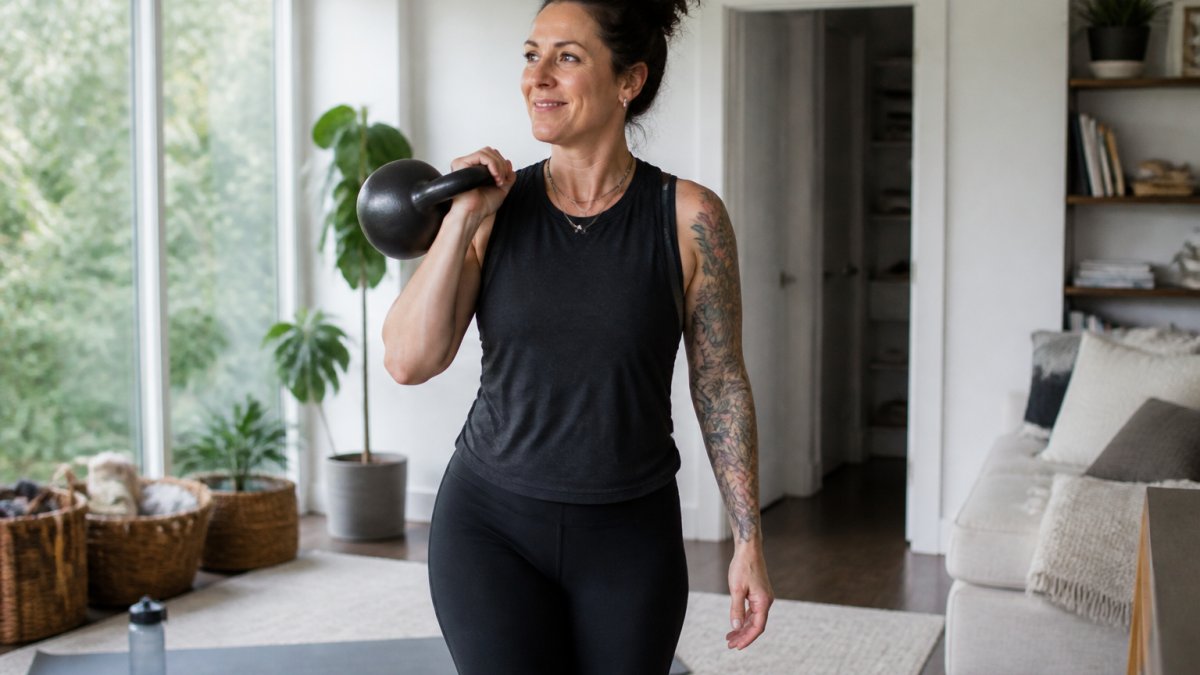
You don't need a gym membership to start. Two short sessions a week with dumbbells, resistance bands or your own bodyweight will do more than hours of gentle cardio.
If the gym feels like a chore, our piece on non-gym movement ideas for perimenopause is full of realistic options. The best movement is the kind you'll actually repeat.
Here's the movement plan in brief, so you can see how little it actually takes.
| Move | How much | Note |
|---|---|---|
| Strength training | Two short sessions a week | Dumbbells, resistance bands or bodyweight |
| Daily movement snacks | A ten-minute walk | Or squats while the kettle boils |
| Stretching | Between meetings | Best movement is the one you'll repeat |
Step 3: Sleep, Stress and Your Nervous System
Poor sleep and chronic stress are two of the biggest hidden drivers of midlife weight gain, and most guides wave at them without explaining why. Here's the mechanism, because knowing it makes the fix less mysterious.
Broken sleep can leave you feeling hungrier and craving quick energy, and the hot flushes and night sweats that often come with perimenopause can make it a nightly event rather than an occasional one.
Stress can also make emotional eating more likely, and it's not a willpower problem.
What actually helps (and what's just noise)
You don't need a 5am cold plunge or a supplement stack. The boring basics do most of the work:
- Anchor your wake time. Getting up at roughly the same time every day, yes, even on weekends, is one of the most reliable ways to steady your body clock.
- Cool the room. A slightly cool bedroom can feel more comfortable for sleep, and breathable bedding and a fan can be a sensible comfort choice if night sweats are the issue.
- Dim the last hour. Lower light and screens down before bed so your melatonin isn't fighting your phone.
- Wind down on purpose. A few minutes of slow breathing (longer exhale than inhale), a walk without your phone, or music that makes you feel alive all help switch you from fight-or-flight into rest-and-digest. This is the 'nervous-system regulation' everyone talks about, it's just daily, deliberate calming, not a mystical state.
- Protect the wind-down. A consistent, low-effort routine signals to your brain that the day is closing.
Where the fun fits in
Here's the bit most wellness content misses: pleasure is a nervous-system tool. Laughing with friends, dancing badly at a gig, singing along at a live show, these aren't frivolous extras, they're genuine downshifters. Connection and joy support the calming side of your nervous system, which in turn supports steadier eating and better sleep. So the night out isn't a threat to your health plan. Done sensibly, it's part of it.
For a gentler, practical walkthrough, our guide to sleeping better during perimenopause covers ways to fall asleep faster and wake less wired.
And because we'll never stop saying it: when your skin feels calmer and your sleep is steadier, you carry yourself differently. Confidence starts with feeling rested in your own skin, not with a number on a scale.
Step 4: Build Realistic Wellbeing Habits That Survive a Bad Week
Realistic wellbeing habits are the ones that still happen when life falls apart. Anyone can eat well on a quiet Sunday. The test is the Tuesday when the kids are sick and work is on fire.
So lower the bar. Make your habits small enough to be almost embarrassing. One glass of water before coffee. A five-minute walk. Protein at breakfast. These tiny actions stack up into a healthier version of you.
Connection counts here too. Our guide to building a realistic midlife wellness routine shows how to make habits stick through the messy weeks.
Body Confidence in Midlife: Measuring Progress Beyond the Scale
Body confidence in midlife grows fastest when you stop letting a single number define you. The scales only tells one part of the story. But 'ignore the scale' is easy to say and hard to do, so here's a more useful framing: measure the things that predict how you'll feel next month, not just how you look today.
Better markers of progress
- Strength: can you lift a little more, or do a few more reps, than last month? That's muscle you're keeping, and muscle is metabolically active tissue worth protecting.
- Energy: do you have more of it by Friday afternoon than you did a month ago?
- Sleep: are you waking less, or falling asleep faster?
- Waist measurement: a tape measure around the middle can be a more useful trend than body weight, because it tracks where fat is settling. Take it the same way, at the same time, and look at the trend over weeks, not any single reading.
- Clothes and how they feel: do they sit differently? This is data too.
- Mood and steadiness: do you feel more like yourself? Are the 3pm crashes less brutal?
- Habits you've actually kept: did you get protein at breakfast most days? Did you walk more? Consistency is the real win.
The honest limitations
None of these markers is perfect, and that's fine. Waist measurement varies with bloating and time of day. Energy fluctuates with sleep and stress. Strength gains stall sometimes. The point isn't to score yourself, it's to notice direction of travel over weeks, not days. If you find yourself obsessing over any single metric, that's a signal to zoom out, not to try harder.
When to get a clinician involved
This is where most lifestyle articles go quiet, so let's not. Weight changes in midlife are often part of the picture, but some patterns are worth a proper look with a clinician, such as rapid or unexplained weight changes. Some health conditions and medicines can affect weight, so a clinician is the right person to talk to about what's relevant for you. That's not scaremongering, it's just sensible.
The confidence bit
Here's the thread we keep pulling: confidence isn't a dress size, and it isn't a before-and-after photo. It's the accumulated evidence that you're looking after yourself, stronger, steadier, better rested. And yes, skincare is part of that. When your skin feels calmer and more comfortable, you carry yourself differently. That's not vanity; it's the quiet confidence that comes from feeling at home in your own skin.
For more on self-compassion and confidence, our perimenopause self-care survival guide is a good next read.
Frequently Asked Questions
Why can weight change during midlife?
Hormone changes, particularly falling oestrogen, are part of the picture during midlife. Sleep disruption and stress can also play a part. It is not about willpower. Weight changes during perimenopause are common and expected. The rebel approach focuses on supporting your body through these shifts with predictable eating, strength training and sleep rather than fighting it with restrictive dieting.
How can I manage midlife weight without restrictive dieting?
Start by adding instead of subtracting: more protein at each meal, more strength training, more sleep. Build predictable eating patterns that fit your day. Aim for a healthier version of what you already eat rather than cutting out entire food groups. Small, consistent action steps beat a 30-day crash diet every time, and they are far easier to keep up during a chaotic midlife week.
Can stress and sleep affect weight during midlife?
Yes. Poor sleep and chronic stress can make emotional eating more likely. A consistent wind-down, some daylight in the morning, and movement snacks during the day are practical habits to try. These realistic wellbeing habits support both sleep and stress management, which in turn support weight management.
When should I speak to a health professional about weight changes?
If your weight is changing rapidly without explanation, or you have other symptoms like severe fatigue, mood changes or unusual bleeding, book an appointment with your GP. A clinician can help work out what's going on for you. The rebel approach is about feeling confident and supported, not diagnosing yourself online. For perimenopause-specific guidance, our friends at UnPause.com.au are a good starting point.
