Tired but Wired at 45: Why It Happens & What Actually Helps

Table of Contents
- What Does 'Tired but Wired' Actually Mean at 45?
- Why Perimenopause Sleep Disturbances Mess with Your Energy
- How to Practice Wellness When You Are Exhausted
- Skincare for Tired Skin: More Than Just Concealer
- The Confidence Factor: Why Looking Good Matters When You're Knackered
- What Actually Works: A Realistic Approach
- Frequently Asked Questions
Last Updated: September 21, 2026
What Does 'Tired but Wired' Actually Mean at 45?
Tired but wired at 45 is that maddening state where your body feels absolutely shattered but your mind won't stop. You're exhausted, yet you can't sleep. You're ready to collapse at 7pm, but at midnight you're still staring at the ceiling replaying conversations from 2003. It's not laziness. It's not weakness. It's your nervous system caught between two contradictory signals.
This feeling is particularly common during perimenopause, when oestrogen fluctuations mess with both your sleep architecture and your stress response. Your brain knows you need rest, but your body keeps firing on all cylinders. The result? You feel simultaneously wrecked and wired, which is about as fun as it sounds.
At Dead Tired Club, we talk to women in their 40s and 50s about this constantly. It's one of the most frustrating symptoms of this life stage, partly because nobody warns you it's coming, and partly because it doesn't fit neatly into any single wellness category. It's not just about sleep. It's not just about stress. It's the intersection of hormonal shifts, life pressure, skin changes, and the simple fact that your body is rewiring itself whether you asked it to or not.
Why Perimenopause Sleep Disturbances Mess with Your Energy
Sleep doesn't just disappear during perimenopause. It fractures. You might fall asleep fine, then wake at 3am drenched in sweat. Or you drift off, only to find yourself awake every 90 minutes. Some nights you're out like a light at 8pm. Other nights you're scrolling at 2am wondering if you'll ever sleep again.
The reason? Oestrogen and progesterone regulate your sleep-wake cycle. When those hormones start their chaotic dance during perimenopause, your sleep quality tanks. Progesterone, which normally acts like a sedative, becomes less reliable. Your body temperature regulation goes haywire, triggering night sweats that jolt you awake. And your stress hormone cortisol, which should dip at night, sometimes stays elevated.
This creates a vicious loop. Poor sleep makes you more reactive to stress. Stress keeps you wired at night. Wired nights mean exhausted days. Exhausted days mean you're running on fumes by evening, so your body crashes early, but then you wake up at 2am and can't get back to sleep. Rinse and repeat for months.
The tired but wired feeling happens because your body is genuinely depleted from fragmented sleep, but your nervous system is simultaneously overstimulated from poor recovery and elevated cortisol. You're running on empty with the accelerator floored.
How to Practice Wellness When You Are Exhausted
The wellness advice you usually hear, "just prioritise sleep" or "manage your stress", is technically correct but absolutely useless when you're this tired. You can't prioritise something that won't come. You can't manage stress when you're running on fumes.
Wellness when you're exhausted isn't about adding more things to your routine. It's about protecting what little energy you have and making the small things count.
Sleep Hygiene That Doesn't Sound Preachy
Sleep hygiene advice usually sounds like a lecture from someone who sleeps perfectly. Here's the reality: you're not going to meditate for 20 minutes before bed when you're knackered. You're not going to journal your feelings. You might, however, do one or two things that actually make a difference.
Blackout blinds are genuinely useful. Your body needs darkness to produce melatonin, and if you're waking at 3am drenched in sweat, even a sliver of street light can make it harder to fall back asleep. Keeping your bedroom cool matters too, when your body temperature regulation is already chaos, a cool room helps.
The one thing that actually seems to help tired but wired at 45 is consistency. Going to bed at the same time and waking at the same time, even on weekends, helps anchor your circadian rhythm when everything else is shifting. It won't fix perimenopause sleep disturbances, but it gives your body something stable to work with.
Avoiding screens an hour before bed helps some people. Others find it makes no difference. The key is noticing what actually affects your sleep, not following a generic checklist.
Stress and the Wired Feeling
Stress doesn't cause the tired but wired feeling, but it absolutely amplifies it. When you're already running on depleted reserves, every work deadline, family obligation, or life uncertainty pushes you further into overstimulation.
The problem is that conventional stress management, meditation, yoga, breathing exercises, requires energy you don't have. If you're too tired to sleep, you're too tired to meditate.
What sometimes helps: movement that doesn't require willpower. A walk. Dancing to one song in your kitchen. Stretching while you're waiting for the kettle. Not because it "reduces cortisol" or any wellness phrase, but because gentle movement can help discharge the nervous system activation that's keeping you wired.
Also useful: saying no to things. Not because you're weak, but because you're genuinely depleted and adding more obligations makes the tired but wired feeling worse. This isn't selfish. This is basic physics.
Skincare for Tired Skin: More Than Just Concealer
Here's what nobody tells you: when you're exhausted and your hormones are shifting, your skin shows it. And when your skin looks rough, you feel rougher. It's a feedback loop.
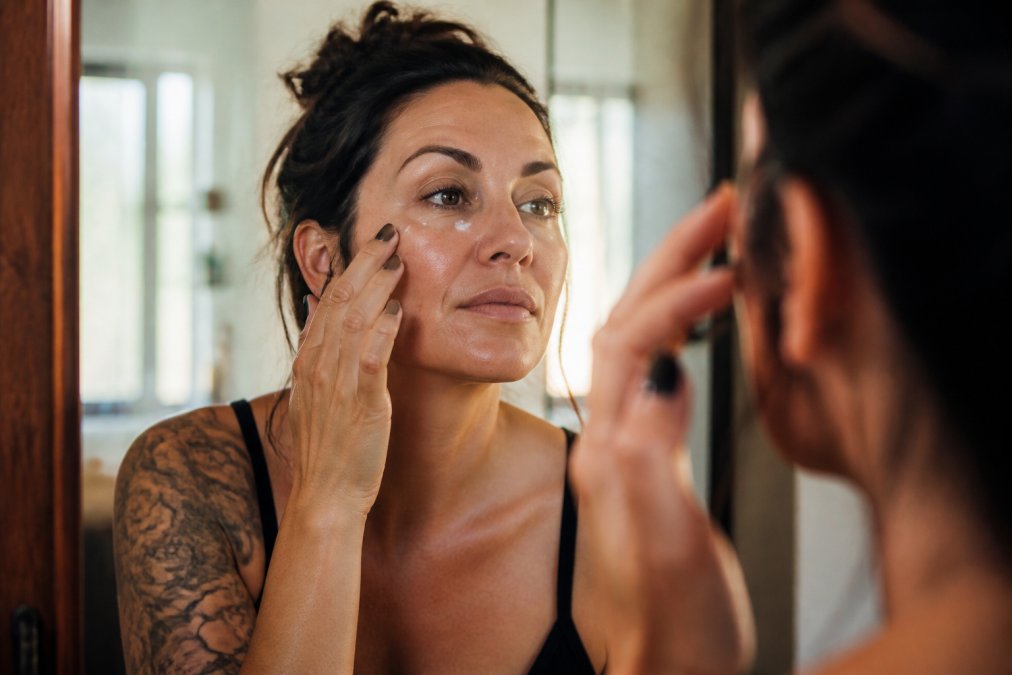
The tired but wired at 45 feeling gets amplified when you look in the mirror and see someone who looks as wrecked as you feel. Hollowed under-eyes. Breakouts in places you thought were behind you. Dull, dehydrated skin that no amount of sleep will fix because it's not about sleep, it's about declining oestrogen affecting your skin's structure and hydration.
Skincare isn't vanity when you're exhausted. It's a small thing you can control. It's looking in the mirror and seeing someone who looks like they have their life together, even if that week you absolutely do not.
Under-Eyes That Look Like You Actually Slept
Your under-eye area is the first place to show exhaustion and the first place to show hormonal skin changes. As oestrogen declines, the skin under your eyes loses firmness faster than anywhere else on your face. That's the hollowing and shadowing you see, not just dark circles from tiredness.
Research on perimenopause skin changes shows that oestrogen decline directly affects collagen and elastin production, which is why the under-eye area becomes more vulnerable during this life stage.
Got Bags? Peptide Firming Under Eye Cream ($46.00) works on the structure underneath the surface. The peptides, Palmitoyl Tripeptide-1, Tetrapeptide-7, and Tripeptide-38, support collagen signalling in that thin, vulnerable area. Retinaldehyde supports smoother texture over time. Cucumber extract does the de-puffing and cooling work your eyes actually want in the morning when you're already exhausted.

This isn't concealer. Concealer sits on top and makes you feel like you're covering up.
Hormonal Breakouts and That Exhausted Feeling
Second puberty at 45 is real. As oestrogen drops relative to androgens, your oil glands stop taking direction. Congestion shows up right where you used to get it decades ago, except now it's sitting next to your first grey hairs.
Skin That Reflects How You Actually Feel
Tired skin looks dull because dehydration and declining oestrogen affect your skin's ability to retain moisture and maintain that plump, lit-from-within quality. When your skin looks dull, you feel duller. When it looks tired, you feel more tired.
The Confidence Factor: Why Looking Good Matters When You're Knackered
There's a reason people say "self-care" when they mean skincare. It's not actually about the skincare. It's about the moment you look in the mirror and see someone who looks like they have their act together, even if internally you're completely wired and exhausted.
What Actually Works: A Realistic Approach
Here's what we know about tired but wired at 45: there's no single fix. There's no supplement that solves it. There's no meditation that makes it disappear.
Frequently Asked Questions
Why do I feel exhausted but cannot fall asleep at 45?
That wired-but-tired feeling at 45 often comes from perimenopause hormonal shifts. Declining oestrogen can trigger night sweats, hot flushes, and racing thoughts that keep your nervous system revved up even when your body is physically knackered. Stress hormones like cortisol also tend to peak at odd hours during this phase, leaving you simultaneously exhausted and unable to switch off. It's not laziness or anxiety alone, it's your hormones throwing a party at 2am.
Is feeling tired but wired a common symptom of perimenopause?
Absolutely. The exhaustion-meets-insomnia combo is one of the most reported perimenopause experiences, especially around 45. Oestrogen decline disrupts both sleep architecture and your body's ability to regulate temperature and mood through the night. Many women describe it as feeling like their brain won't shut down even though they're running on fumes. You're not alone, and it's not something you're doing wrong, it's a documented hormonal pattern.
Can skincare routines help me feel more refreshed in the morning?
Yes, genuinely. When your under-eyes look less hollow and shadowed, you catch your reflection and feel a small boost of 'okay, I've got this' before the day even starts. Peptide-based eye creams like Got Bags? target the structural loss that oestrogen decline causes under the eyes, so you're not just covering exhaustion, you're addressing what perimenopause actually does to that delicate skin. Feeling like your face matches your effort, not your exhaustion, shifts your whole morning energy.
What should I do if tired but wired symptoms are really affecting my quality of life?
If symptoms are hitting you hard, it's always smart to speak to an expert via our friends at UnPause.com.au. Dead Tired Club does not provide medical advice. What we do know is that a combination of gentle wellness habits, skincare that makes you feel seen, and community support can help you feel less alone in the experience. But professional guidance is worth exploring if sleep disturbance or exhaustion is serious.