Is Perimenopause Causing My Insomnia?

Table of Contents
- Yes, Perimenopause Is Almost Certainly Causing Your Insomnia
- How Oestrogen Decline Wrecks Your Sleep
- How to Improve Sleep Hygiene in Midlife
- Managing Night Sweats and the Wired-and-Tired Cycle
- Skincare Routine for Tired Skin (Because You Deserve to Look Rested)
- Your Bedtime Routine: The Non-Negotiable Reset
- When to Call in Reinforcements
- Frequently Asked Questions
Last Updated: September 28, 2026
Yes, Perimenopause Is Almost Certainly Causing Your Insomnia
If you're lying awake at 3 am, drenched in sweat, wondering if you're losing your mind, you're not. Your body is going through one of the biggest hormonal shifts of your life, and yes, is perimenopause causing my insomnia is probably the question you've been asking yourself for months now.
The answer is straightforward: oestrogen and progesterone are tanking. Both of these hormones regulate sleep, body temperature, and mood. When they start their slow disappearing act during perimenopause, your sleep architecture falls apart. Night sweats wake you up. Your brain won't shut off. You're exhausted but wired. It's not weakness. It's biology being absolutely brutal.
At Dead Tired Club, we understand this exact nightmare. The good news? You're not broken, and there are real strategies that actually work. Below, we'll walk you through why this is happening, what you can do tonight, and how to rebuild sleep that feels like sleep again.
How Oestrogen Decline Wrecks Your Sleep
When oestrogen drops, your brain loses a key chemical messenger. Oestrogen supports serotonin production, which regulates mood and sleep-wake cycles. It also stabilises body temperature. Progesterone, the other major player, is a natural sedative. As both hormones fluctuate wildly during perimenopause, your sleep suffers in multiple ways.
Your REM sleep (the restorative bit) gets disrupted. Your core body temperature swings unpredictably, triggering night sweats that jolt you awake. Your brain becomes hyperaroused, racing thoughts at midnight, impossible to switch off. This is why is perimenopause causing my insomnia isn't just a question; it's a documented reality affecting millions of women.
The wired-and-tired cycle is real. You're exhausted all day, but when your head hits the pillow, your nervous system is firing on all cylinders. It's not insomnia in the traditional sense. It's hormonal insomnia, and it requires a different approach than standard sleep advice.
How to Improve Sleep Hygiene in Midlife
Sleep hygiene sounds boring, but it's your foundation. When your hormones are chaos, the basics matter more than ever.
Keep your bedroom cold. Aim for 16-18°C. Night sweats will happen, but a cool environment helps your body regulate temperature. Use breathable bedding (cotton or linen), and don't be afraid to have a spare sheet nearby for quick changes.
Stick to a consistent sleep schedule. Your circadian rhythm needs anchoring right now. Go to bed and wake up at the same time, even at weekends. This is harder than it sounds when you're exhausted, but consistency signals your body that sleep is coming.
Avoid screens 60 minutes before bed. Blue light suppresses melatonin production. Your oestrogen is already sabotaging your melatonin; don't make it worse.
Limit caffeine after 2 pm. Your sensitivity to caffeine changes during perimenopause. That 3 pm coffee might be keeping you wired until midnight.
Exercise, but not late. Movement improves sleep quality, but intense exercise within 3 hours of bedtime can overstimulate your nervous system. Morning or early afternoon workouts are your friend.
Managing Night Sweats and the Wired-and-Tired Cycle
Night sweats aren't just uncomfortable; they're sleep-destroying. You wake up soaked, your sheets are damp, and falling back asleep feels impossible.
Layer your bedding strategically. Use a lightweight duvet you can throw off easily, plus a sheet you can swap. Keep a dry sheet folded at the foot of your bed. When you wake up sweating, you can change quickly without fully waking your partner or getting up for fresh bedding.
Keep water by your bed. Dehydration worsens night sweats. Sip water when you wake up, but not so much that you're running to the toilet every hour.
The wired-and-tired trap happens because your cortisol (stress hormone) is dysregulated. Your body is stressed by the hormonal chaos, so even though you're exhausted, you're also in fight-or-flight mode at night.
Try a wind-down ritual 30 minutes before bed. This signals your nervous system that sleep is coming. Read, listen to a podcast, do gentle stretching, anything that feels calming, not stimulating.
Skincare Routine for Tired Skin (Because You Deserve to Look Rested)
Sleep deprivation shows on your face. Your skin looks grey, puffy, and exhausted because it actually is. But here's the thing: taking care of your skin at night is also a ritual that signals to your brain that sleep matters.
A simple routine takes 5 minutes and gives your skin the support it needs during hormonal chaos.
Start with a gentle cleanser. Remove the day's grime. Your skin barrier is more fragile during perimenopause, so skip anything harsh.
Apply a hydrating serum or essence. Your skin loses moisture as oestrogen declines. A hydrating layer helps your skin look plumper and more awake.
Use a targeted treatment for your biggest concern. If hormonal breakouts are happening (they usually are), reach for something with salicylic acid. Got Bumps? is designed specifically for the jawline and chin congestion that shows up during perimenopause. One pump, once daily, helps clear the bumps nobody warned you about.

If fine lines are your thing, a copper peptide serum like Got Lines? supports your skin's collagen without the irritation that comes with retinol when you're already dealing with hormonal sensitivity.

Finish with a nourishing moisturiser. Lock everything in. Your skin barrier needs support right now.
The ritual matters as much as the products. When you're caring for your skin, you're also telling yourself that you're worth the effort. That matters more than you'd think when you're running on fumes.
Your Bedtime Routine: The Non-Negotiable Reset
Your bedtime routine is the difference between a night of fragmented sleep and actual rest. This isn't fluff. This is how you reclaim your sleep.
30 minutes before bed: Dim the lights. Your brain needs the signal that night is coming. Bright overhead lights suppress melatonin production.
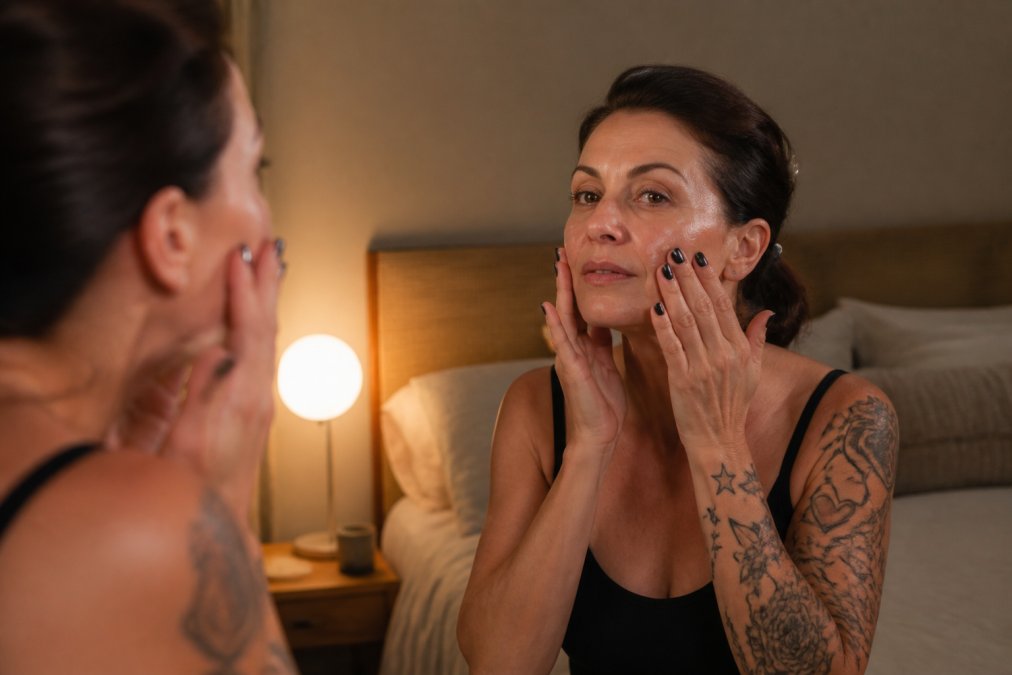
20 minutes before bed: Do your skincare routine. This is your transition moment. You're moving from the chaos of the day into a space of care for yourself.
15 minutes before bed: Put your phone away. Seriously. Scrolling is a trap when you're already wired.
10 minutes before bed: Get into bed. Read something light or listen to a podcast if you need background noise. Nothing stimulating.
5 minutes before bed: Close your eyes. Try box breathing: inhale for 4, hold for 4, exhale for 4, hold for 4. Repeat 5 times. It sounds silly, but it genuinely calms your nervous system.
The key is consistency. Your body learns that this sequence means sleep is coming. After a few weeks, your nervous system will start relaxing the moment you dim the lights.
When to Call in Reinforcements
Sometimes sleep hygiene and skincare routines aren't enough. Your body might need additional support.
If you've been managing insomnia for months and nothing is improving, it's worth talking to a healthcare provider. They can assess whether your oestrogen levels are affecting your sleep specifically and discuss options that might help.
If night sweats are severe enough that you're changing sheets multiple times a night, or if your sleep deprivation is affecting your work or relationships, that's also a sign to reach out. This isn't weakness. This is recognising that you need support.
If symptoms are hitting you hard, it's always smart to speak to an expert via our friends at UnPause.com.au. Dead Tired Club does not provide medical advice.
The reality is this: is perimenopause causing my insomnia is a question with a clear answer, and you're not alone in asking it. Your sleep is disrupted because your hormones are in freefall. That's not a personal failing. That's biology. But it's also fixable. Start with the basics tonight, cool room, consistent bedtime, skincare ritual, and give your body a few weeks to respond. You've lived loud and survived chaos. You can survive this too, and you can do it without looking like you're barely holding it together. That's what Dead Tired Club is here for: to help you feel like yourself again, even when your body is rewriting the rules.
Frequently Asked Questions
Why does perimenopause cause insomnia?
Oestrogen decline during perimenopause disrupts your body's sleep-wake cycle and reduces serotonin production, which helps regulate sleep. Night sweats from hormonal fluctuations also jolt you awake. Your brain is literally rewiring itself, and sleep is often the first casualty. It's not weakness; it's biology being spectacularly inconvenient.
How can I manage night sweats and sleep disturbances?
Keep your bedroom cool (around 16-18°C), use breathable cotton bedding, and keep water nearby. Layer your pyjamas so you can shed them without getting out of bed. A cool shower before sleep helps. If night sweats are severe, speak to an expert via UnPause.com.au. Dead Tired Club doesn't provide medical advice, but we do understand that waking up drenched at 3am is absolutely maddening.
Does a skincare routine actually help when I'm exhausted?
Yes. A consistent evening skincare routine signals to your body that sleep is coming, and it helps you feel more in control when everything feels chaotic. Products like Got Lines? (our copper peptide serum) and Got Bumps? (our BHA serum) address the hormonal skin changes that often hit hardest when you're sleep-deprived. Taking two minutes to care for your skin is an act of rebellion against the chaos.
Is it normal to have racing thoughts during perimenopause?
Absolutely. Hormonal shifts affect neurotransmitters that calm your brain. You might lie awake replaying conversations from 1997 or planning things that don't need planning at 2am. This is normal. A consistent bedtime routine, cool room, and avoiding screens an hour before bed all help settle a racing mind. If thoughts are intrusive or distressing, speak to an expert.