7 Oestrogen-Friendly Foods for Women Over 40

Last Updated: November 7, 2026
Quick Summary
Oestrogen friendly nutrition for women over 40 means building meals around fibre, protein, healthy fats and phytoestrogens, plant compounds found in soy, legumes and ground flaxseeds. Aim for one to two serves of soy foods daily and half a cup to one cup of cooked legumes most days. Food supports steady energy through perimenopause but does not replace medical care.
- Grind flaxseeds or buy them pre-ground and keep them in the fridge so your body can use them.
- Build each meal with half a plate of vegetables, a quarter protein and a quarter whole grains.
- Eat oily fish like salmon, sardines, mackerel or tuna two to three times a week for omega-3s.
- Pair carbohydrates with protein and fibre to slow glucose uptake and keep energy steadier.
- Add one extra fibre serve every few days and drink enough water to avoid bloating.
Table of Contents
- What Oestrogen-Friendly Nutrition Actually Means
- Step 1: Load Up on Foods Containing Phytoestrogens
- Step 2: Build a Balanced Diet for Women Over 40
- Step 3: Add High-Fibre Foods Without the Faff
- Step 4: Get Your Protein and Omega-3 Fats Right
- Nutrition During Perimenopause: Portions, Energy and Blood Sugar
- Step 5: Personalise by Life Stage, Symptoms and Safety
- Your Next Step: Eat Well, Feel Good, Join Dead Tired
- Frequently Asked Questions
What Oestrogen-Friendly Nutrition Actually Means
Oestrogen friendly nutrition for women over 40 is a way of eating that supports your changing hormone levels with food, not wishful thinking. At Dead Tired Club, we talk to women every day who are sick of beige wellness advice. So here's the honest version: food can help you feel steadier through perimenopause, but it won't replace medical care.
Oestrogen-friendly eating means building meals around fibre, protein, healthy fats and plant compounds called phytoestrogens.
What It Can and Cannot Do
Let's be clear about the limits. No plate of edamame will fix a hot flush at 3am. What food can do is support your body through the transition:
- Give you a routine that feels like care, not punishment
What it cannot do is treat severe symptoms on its own. If hot flushes, mood swings or exhaustion are running your life, that's a conversation for your GP.
Step 1: Load Up on Foods Containing Phytoestrogens
Foods containing phytoestrogens are plant foods with weak, oestrogen-like compounds. They're not hormones.
Here's the bit most articles skip: phytoestrogens are not the same thing as the oestrogen your ovaries make. That's why no food should be treated as a hormone replacement.
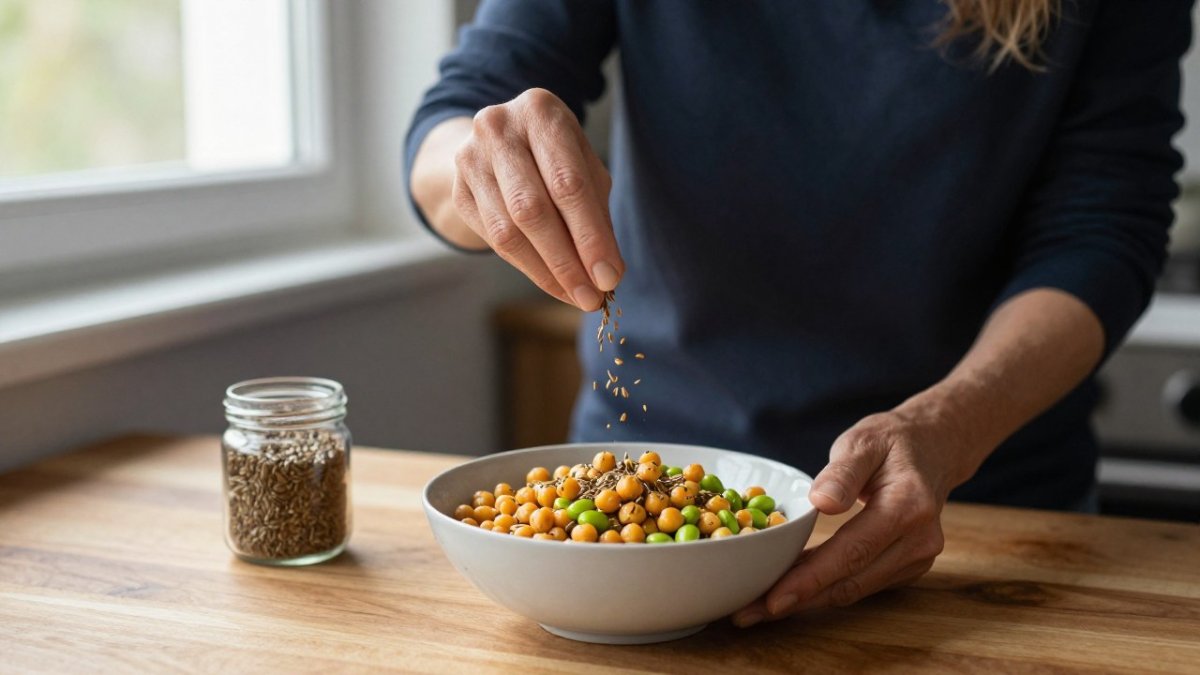
Soy, Legumes and Flaxseeds
These are the big three, and they're easy to find:
- Soy foods: tofu, tempeh, edamame and soy milk
- Legumes: chickpeas, lentils, black beans and kidney beans
- Flaxseeds: ground, not whole, so your body can actually use them
- Other seeds: sesame, sunflower and pumpkin seeds
A common mistake is buying whole flaxseeds and wondering why nothing changes. Grind them, or buy them pre-ground and keep them in the fridge.
Practical Portion Targets
Vague advice like 'eat more soy' is useless when you're standing in the supermarket. Here are some general portion ideas:
-
Soy foods: one to two serves a day. A serve is roughly 100g of tofu or tempeh, a small handful of edamame, or a glass of soy milk.
-
Legumes: half a cup to one cup cooked, most days. Tinned chickpeas count, rinse them and you're done.
-
Other seeds: a small handful a day, sprinkled over yoghurt, porridge or salad.
Watch out: ramping up fibre and legumes overnight is the fastest route to bloating and a firm decision to give up by Wednesday. Add one serve every few days and drink enough water.
What About Supplements?
If you're considering a supplement, especially alongside medication or hormone therapy, that's a conversation for your GP.
If you want a practical plan for steadying your oestrogen levels, our guide on how to manage oestrogen fluctuations naturally walks you through seven steps.
Here are the practical portion targets for the main phytoestrogen foods.
| Food | Portion target | Note |
|---|---|---|
| Soy foods | One to two serves a day | A serve is roughly 100g tofu or tempeh |
| Legumes | Half a cup to one cup cooked, most days | Tinned chickpeas count, rinse them |
| Flaxseeds | Ground, not whole | Keep pre-ground seeds in the fridge |
| Other seeds | A small handful a day | Sprinkle over yoghurt, porridge or salad |
Step 2: Build a Balanced Diet for Women Over 40
A balanced diet for women over 40 looks different from the one you ate at 25. That's not a punishment.
Build each meal like this:
- Half your plate: vegetables and salad
- A quarter: protein (fish, eggs, tofu, legumes, lean meat)
- A quarter: whole grains or starchy veg
- A thumb of fat: olive oil, nuts, avocado
If weight is shifting in ways that feel unfair, our take on midlife weight management covers the rebel approach: no crash diets, no shame.
Step 3: Add High-Fibre Foods Without the Faff
Easy fibre wins:
- Swap white bread for wholegrain
- Add a tin of chickpeas to whatever you're cooking
- Eat the skin on your potatoes
- Keep frozen berries in the freezer for breakfast
- Snack on nuts and seeds instead of biscuits
Step 4: Get Your Protein and Omega-3 Fats Right
Protein and omega-3 fats are the two things most women over 40 under-eat.
Aim for protein at every meal. Think eggs at breakfast, tuna at lunch, tofu or salmon at dinner. For omega-3s, oily fish like salmon, sardines, mackerel and tuna two to three times a week is a solid target. Not a fish fan? Talk to your GP about options.
Nutrition During Perimenopause: Portions, Energy and Blood Sugar
Nutrition during perimenopause needs to work with your body, not against it. Hormone levels shift, metabolism slows, and blood sugar gets moodier. Smaller, protein-led meals often feel better than three big ones.
Why Blood Sugar Gets Moody
As oestrogen fluctuates, your body's sensitivity to insulin can shift too. That's the mechanism behind the 3pm crash, the sudden hangry rage and the biscuit tin that calls your name. Pairing carbohydrates with protein and fibre slows glucose uptake, which keeps energy steadier rather than spiking and crashing. It's not about cutting carbs, it's about not eating them alone.
Practical Targets
Here are some general guidelines:
- Carbs: choose whole grains and starchy veg, and pair them with protein rather than eating them solo.
- Sugar: keep it for treats, not habits.
What a Day Might Look Like
- Breakfast: porridge with ground flaxseeds, Greek yoghurt and berries
- Lunch: lentil and roasted veg salad with a boiled egg and olive oil
- Snack: apple with a small handful of almonds
- Dinner: salmon with roasted sweet potato and broccoli
That's not a prescription, it's a template. Swap the salmon for tofu, the yoghurt for soy yoghurt, the lentils for chickpeas. The pattern is what matters: protein and fibre at every meal, healthy fats throughout, and enough food that you're not white-knuckling it by 4pm.
Tracking What Actually Changes
You can't manage what you don't measure, but you don't need an app with seventeen dashboards. Keep a simple note for two weeks: what you ate, your energy at 10am and 3pm, sleep quality and any symptoms. Patterns emerge fast, most women find one or two changes do most of the work.
And here's the part that ties it all back to how you feel: when your energy is steadier, you're more likely to do the things that make you feel like yourself, see live music, dance badly, book the trip. Confidence isn't a beauty standard; it's what happens when your body isn't running on fumes.
Step 5: Personalise by Life Stage, Symptoms and Safety
Your needs depend on where you are. Perimenopause, menopause and postmenopause each bring different challenges, and your health history matters.
Ask yourself:
- Are my main symptoms hot flushes, fatigue or weight gain?
- Do I have any heart, bone or thyroid concerns?
- Am I taking medication that interacts with food?
If you're unsure how to raise this with your GP, our guide on talking to your doctor about perimenopause symptoms gives you the words. And if you're weighing up supplements alongside food changes, our guide to perimenopause supplements covers what the evidence actually says.
Your Next Step: Eat Well, Feel Good, Join Dead Tired
Here's the challenge: pick one step from this guide and do it for a week. Just one. Try a small change to your breakfast or snacks. Small moves beat big plans you abandon by Thursday.
At Dead Tired Club, we make feel-good gear and wellness products for women who are done with beige. Our community is built for women who lived loud and refuse to disappear at midlife. No pressure to engage, no unrealistic ideals. Just validation, humour and gear that gets it.
Want the bigger picture on managing symptoms? Read our full guide on how to minimise perimenopause symptoms. Then come join us.
Get started with Dead Tired Club and feel a bit more like yourself again. If symptoms are hitting you hard, it's always smart to speak to an expert via our friends at UnPause.com.au. Dead Tired Club does not provide medical advice.
If symptoms are hitting you hard, it's always smart to speak to an expert via our friends at UnPause.com.au. Dead Tired Club does not provide medical advice.
Frequently Asked Questions
What does oestrogen-friendly nutrition mean?
It means eating a dietary pattern that supports your body through hormone changes rather than promising to fix them. In practice that looks like plenty of foods containing phytoestrogens, high-fibre foods, protein and healthy fats. It cannot replace hormone therapy or medical treatment.
Which foods contain phytoestrogens?
Soy foods such as tofu, tempeh and edamame are the best-known sources, along with legumes like chickpeas and lentils. Flaxseeds and other seeds also contain them. These plant compounds are weaker than your body's own oestrogen.
Can food increase oestrogen levels?
Food cannot reliably raise your oestrogen levels the way hormone therapy can. Phytoestrogens are much weaker than the oestrogen your body makes, and their effect varies from person to person. If symptoms are severe, speak to a health professional rather than relying on food alone.
How can I add more fibre to my meals?
Start with breakfast: swap white toast for wholegrain, or add a spoon of flaxseeds to your yoghurt. At lunch, throw a tin of chickpeas into a salad. At dinner, leave the skin on potatoes and add lentils to a curry. Increase gradually and drink plenty of water so your gut has time to adjust.
