Why Every Woman in Her 40s Needs a Signature Serum: Your Guide

Last Updated: 14 November 2026
Quick Summary
Every woman in her 40s needs a signature serum because hormonal shifts in perimenopause reduce oestrogen's support for collagen, hydration and barrier function, so skin needs one concentrated, consistent treatment chosen for its current needs. A signature serum is the one leave-on product you repurchase without thinking and layer into your routine consistently.
- Name one dominant concern first: firmness, tone, hydration or congestion, not all four.
- Match that concern to an ingredient family such as peptides, vitamin C, humectants or salicylic acid.
- Apply serum to clean, slightly damp skin, then moisturiser, then sunscreen in the morning.
- Patch test for a few days and start with every second or third night.
- Give a new serum two weeks before deciding it is not working.
Table of Contents
- The Unfiltered Truth About Skin in Your 40s
- Why a Signature Serum Is Non-Negotiable (And What It Actually Does)
- Finding the Best Serum for Women Over 40: It's Personal
- Serum Ingredients for Mature Skin: What to Look For (And What to Ignore)
- How to Layer Serum and Moisturiser (Without Wasting Your Money)
- How Long Does It Take for a Serum to Work? Setting Realistic Expectations
- Your Next Step: Building Your Signature Serum Routine
- Frequently Asked Questions
The Unfiltered Truth About Skin in Your 40s
Your skin in your 40s isn't betraying you. It's reacting to a hormonal rewrite, and the changes are real. This guide from Dead Tired Club explains why a signature serum is worth having: one product chosen for your skin, your stage, and your actual life, rather than whatever a beige shelf told you to buy.
Here's the uncomfortable part most guides skip. The glow you had at 30 wasn't a personality trait. It was oestrogen doing quiet, unpaid labour. When levels start to shift through perimenopause, that labour force downsizes, and your skin files a complaint.
Below, we'll show you exactly how to pick one serum and stick with it. But first, here's what most guides get wrong: they hand you a ten-step routine when you're already running on four hours' sleep and a coffee.
Hormonal Havoc: What's Happening Under the Surface
Oestrogen plays a supporting role in collagen production, skin hydration and barrier function. As it fluctuates and declines, many women notice dryness, a duller tone, fine lines that seem to arrive overnight, and a barrier that suddenly objects to products it once tolerated.
Sebum production can behave strangely too. Some women dry out; others get jawline congestion decades after they thought breakouts were done. Both are common. Neither is a personal failing.
The takeaway: your skin isn't broken, it's changing. A routine built for your 20s won't keep pace, and that's precisely where a signature serum earns its place.
Why a Signature Serum Is Non-Negotiable (And What It Actually Does)
A signature serum is the one concentrated, leave-on treatment you repurchase without thinking, chosen for your skin's current needs and layered into your routine consistently. It's your default, not your experiment.
Serums generally carry a higher concentration of active ingredients than moisturisers, in a lighter base that sits closer to the skin. Here are five reasons a signature serum can be useful:
- Targeted support. A serum addresses specific concerns, whether that's firmness, tone or hydration.
- Hydration where it counts. Humectants draw water into the upper layers, which helps with the tightness that shows up alongside dryness.
- Barrier backup. Ingredients like niacinamide and panthenol support the skin barrier, which matters more once sensitivity creeps in.
- Antioxidant defence. Environmental stress adds up over decades, and antioxidants help skin cope.
- Consistency. One product you actually use beats seven you abandon by February.

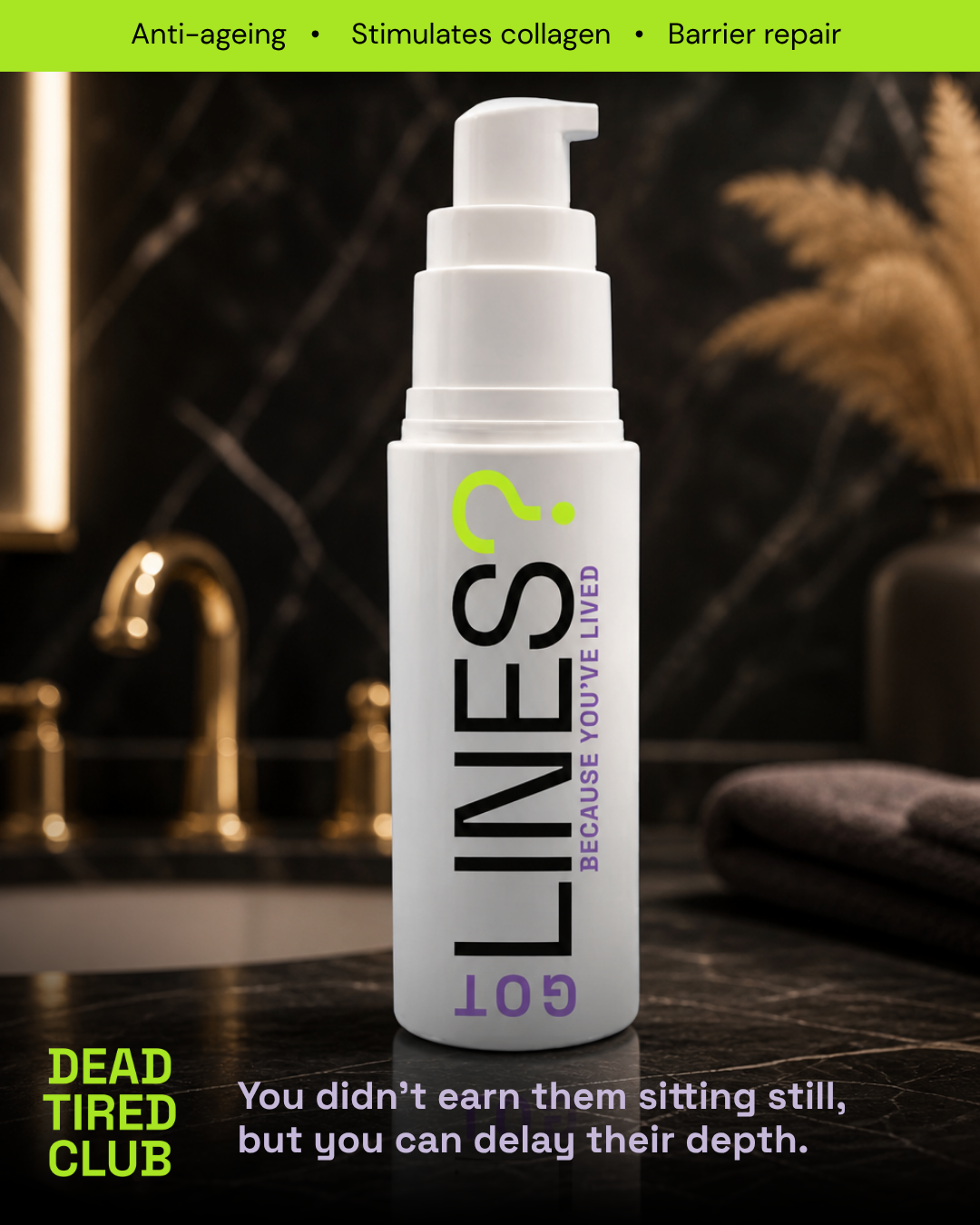
We built Got Lines? (Because You've Lived) around this idea. It's a copper peptide serum with GHK-Cu, which supports your skin's own collagen and elastin, plus CoQ10 for antioxidant backup and niacinamide for tone. At $49, it's the kind of step you can actually keep up.
Finding the Best Serum for Women Over 40: It's Personal
The best serum for women over 40 is the one that matches your dominant concern, your skin type and your tolerance for actives, not the one with the loudest marketing. That's the whole game. But 'it's personal' is only useful if you know how to make it personal, so here's the method we'd actually use.
Start by naming your dominant concern. Not all four. One. Firmness and fine lines, tone and dark spots, dryness and tightness, or congestion and breakouts. If you try to solve everything at once you'll end up with a bathroom shelf full of half-used bottles and a barrier that hates you.
Then match the concern to an ingredient family. Peptides and retinoids are the usual firmness picks; vitamin C and niacinamide for tone; hyaluronic acid, glycerin and panthenol for hydration and barrier support; salicylic acid for congestion. That's the shortlist, and it's shorter than most shelves suggest.
Next, check your tolerance. If your skin has become suddenly reactive, start with the gentlest option in that family and build up. A common pattern is women who could once handle anything finding that a strong acid now stings for a week. That's not weakness, it's a changed barrier, and it deserves respect rather than a pep talk.
Then be honest about your routine. A serum only works if it survives contact with your actual life. If you cleanse once and fall into bed, a two-step evening routine is your ceiling. If you love a ritual, you'll layer happily. There's no prize for the more complicated routine, only for the one you repeat.
Finally, set a budget you'll genuinely sustain. A serum you repurchase without flinching beats a precious one you ration. Consistency is the active ingredient nobody puts on the label.
The Signature Serum Test: Five Questions to Ask
- What is my number one concern right now? Firmness, tone, hydration or congestion. Pick one.
- Which ingredient family matches it? Peptides, vitamin C, hydrating humectants or salicylic acid.
- What does my skin tolerate? Have you used acids or retinoids before, or does everything sting lately?
- Does it fit my real routine? Morning, evening, or both, and will you actually do it?
- Can I afford to repurchase it? If not, it's an experiment, not a signature.
If you want a simple routine to slot your serum into, our guide to skincare products for busy women over forty keeps it realistic.
Serum Ingredients for Mature Skin: What to Look For (And What to Ignore)
Look for ingredients with a clear job: peptides for firmness, niacinamide for tone and barrier support, hyaluronic acid and glycerin for hydration, vitamin C for brightening, and salicylic acid for congestion. Ignore anything that promises a new face in a week.
| Ingredient | What it does | Best for | Watch out for |
|---|---|---|---|
| Copper peptides (GHK-Cu) | Supports collagen and elastin | Fine lines, firmness | Introduce slowly if reactive |
| Niacinamide | Evens tone, supports barrier | Uneven tone, sensitivity | Rare flushing at high strength |
| Hyaluronic acid | Draws in water, plumps | Dryness, dehydration | Needs a moisturiser on top |
| Vitamin C | Antioxidant, brightening | Dark spots, dullness | Can sting on broken skin |
| Salicylic acid | Exfoliates inside the pore | Jawline congestion | Start every second day |
Evidence quality varies, and honesty helps here. Peptides have lab and small clinical support rather than headline-grabbing trials, which is worth knowing before you expect miracles. The Australian Government's guidance on cosmetic claims is a useful reminder that no cosmetic treats a medical condition.
If dryness is your main issue, our guide to a skincare routine for perimenopause dryness pairs the right cleanser and moisturiser with your serum.
How to Layer Serum and Moisturiser (Without Wasting Your Money)
Apply serum to clean, slightly damp skin, then follow with moisturiser to seal it in, then sunscreen in the morning. Thinnest to thickest, always. That's the short version. The longer version is where people actually go wrong.
A simple order that works for most people:
- Cleanse gently, without stripping.
- Serum on damp skin, patted rather than rubbed.
- Moisturiser to lock in hydration and support the barrier.
- Sunscreen every morning, no negotiating.
Now the part most guides skip: how to introduce the thing without lighting your face on fire. Patch test on your inner forearm or jawline for a few days before going full-face. Start with every second or third night rather than twice daily. Give it two weeks before you decide it's 'not working', because most of what you'll notice early is hydration, not transformation.
Ingredient compatibility is the other quiet trap. Vitamin C and niacinamide generally play nicely together in modern formulas, but a strong acid and a retinoid in the same sitting is a recipe for a red, tight face. If you're using more than one active, split them by time of day or alternate nights. Hydrating ingredients like hyaluronic acid and glycerin are the peacekeepers, so layer them alongside actives rather than instead of them.
Watch out: layering too many actives at once is the fastest route to irritation, and irritated skin can't do much with the expensive stuff on top. One active serum at a time is plenty, and if something stings persistently, stop rather than push through. If you're noticing new stinging or redness, our piece on whether perimenopause can cause sudden skin sensitivity is worth a read before you add anything else.
How Long Does It Take for a Serum to Work? Setting Realistic Expectations
Results from a serum usually take consistent use over several weeks, and hydration effects can show up sooner than firmness or tone.
Patch test first, introduce one new product at a time, and photograph your skin in the same light every fortnight. That last tip is unglamorous and genuinely useful, because memory is a terrible judge of your own face.
Your Next Step: Building Your Signature Serum Routine
Start with one serum that matches your main concern, one gentle cleanser, one moisturiser and one sunscreen. Everything else is optional.
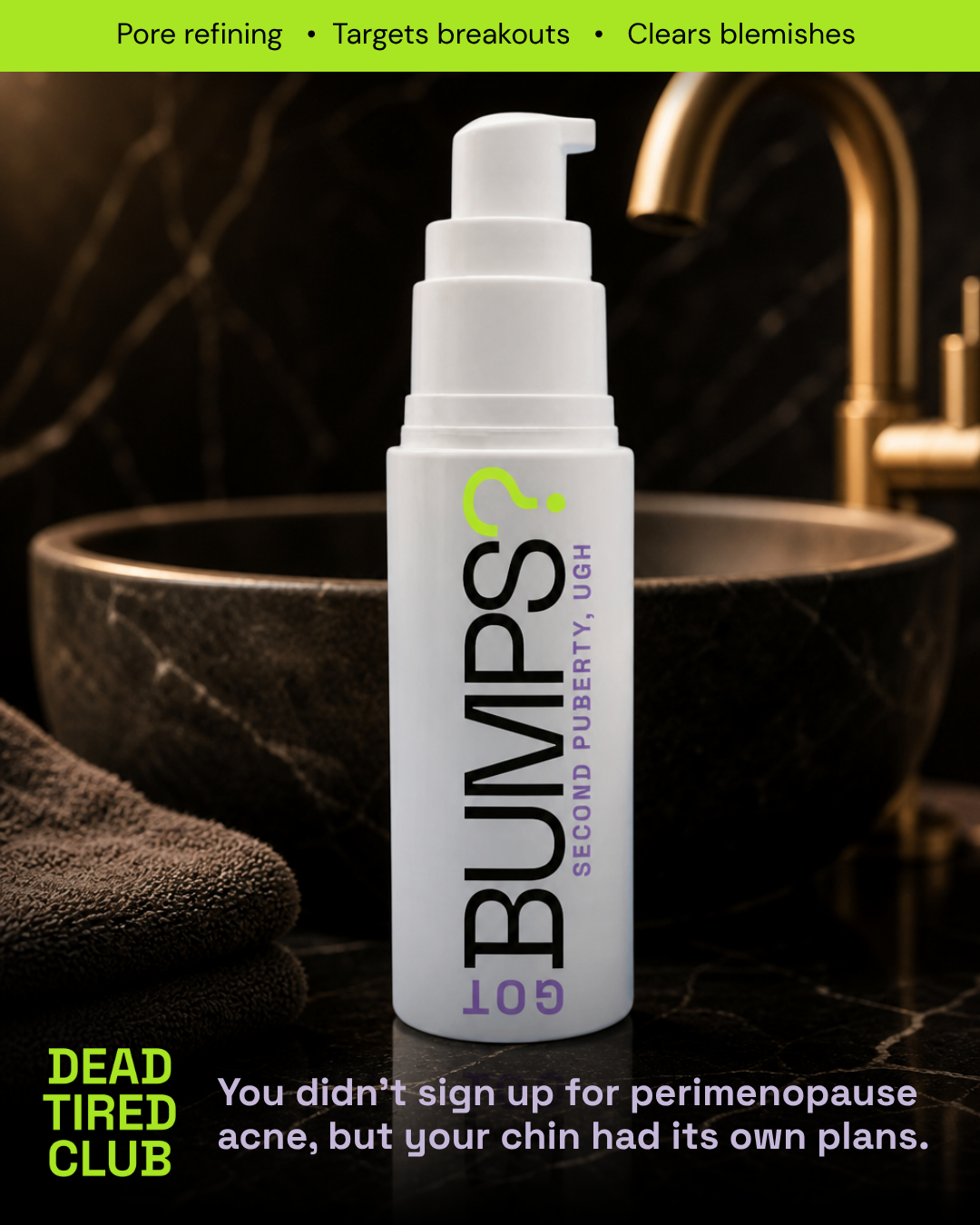
If you're noticing hormonal skin changes alongside other shifts, our guide to the 7 signs of perimenopause every woman should know helps you see the bigger picture. And if congestion has arrived uninvited, Got Bumps? (Second Puberty, Ugh) is a BHA blemish serum built around salicylic acid.
Confidence isn't a filter. It's knowing what you're putting on your face and why. Find the serum that fits your skin, use it consistently, and let the rest go.
If symptoms are hitting you hard, it's always smart to speak to an expert via our friends at UnPause.com.au. Dead Tired Club does not provide medical advice.
Frequently Asked Questions
What does a serum actually do for skin in your 40s?
A serum delivers a high concentration of active ingredients to address specific concerns like dryness, fine lines, or uneven tone. In your 40s, as oestrogen levels shift, skin hydration drops and collagen production slows. A signature serum targets these changes directly, supporting your skin barrier and helping it look firmer and more resilient. Think of it as the specialist in your routine, working alongside your cleanser and moisturiser to keep skin healthy and comfortable.
How do I choose the best serum for women over 40?
Start by identifying your main skin concern. Is it dryness, loss of firmness, or dark spots? Look for ingredients that address that concern, like peptides for firmness or niacinamide for tone. Consider your skin type too: if you're sensitive, avoid strong acids and opt for gentle hydrators. A good rule is to choose a serum with a short, focused ingredient list that targets your primary issue, rather than one that claims to do everything at once.
Can I use more than one serum in my routine?
Yes, but keep it simple. You can use two serums, one in the morning and one at night, or layer them if they have compatible ingredients. For example, a hydrating serum with hyaluronic acid can be followed by a peptide serum. Apply the thinnest, most watery formula first, then the thicker one. Avoid layering multiple strong actives like retinoids and exfoliating acids at the same time to prevent irritation.
Should I use serum before or after moisturiser?
Always apply serum before moisturiser. Serums have smaller molecules designed to penetrate deeper into the skin, while moisturisers are formulated to sit on the surface and lock in hydration. After cleansing, apply your serum to damp skin, let it absorb for a minute, then follow with your moisturiser. This order ensures the active ingredients in your serum can do their job without being blocked by a heavier product.
