Skincare for Oestrogen Decline: What Actually Helps

Last Updated: November 19, 2026
Quick Summary
Oestrogen decline skincare focuses on support rather than fixes: a fragrance-free moisturiser with glycerin for dryness, peptide serums for firmness, and salicylic acid introduced slowly for jawline breakouts. Ingredients support appearance, while daily SPF and a simple four-step routine help you stick with it.
- Falling oestrogen can reduce skin hydration and collagen over time, so dryness, thinning and sensitivity often appear together.
- Choose a fragrance-free moisturiser with glycerin in a richer texture, applied to damp skin to lock in moisture.
- Introduce salicylic acid slowly, every second day at first, and avoid picking at jawline breakouts.
- Judge peptide serums over several weeks rather than days, since firmness results build gradually.
- Give any routine at least six weeks before judging results, and wear SPF 30 or higher every morning.
Table of Contents
- Why Your Skin Changes When Oestrogen Drops
- Matching Your Skin Symptoms to the Right Care
- Skincare Ingredients for Mature Skin Worth Knowing
- A Simple Menopause Skincare Routine You Can Actually Stick To
- Lifestyle Factors and What the Evidence Says
- Your Next Step: Build a Routine That Fits Your Skin
- Frequently Asked Questions
Your face has been quietly rewriting its own rules, and nobody sent you the memo. One day your moisturiser is fine, the next your cheeks feel tight and your jawline has staged a small, unwelcome breakout. Welcome to oestrogen decline skincare, a topic that deserves more than a shrug and a jar of cream. This guide from Dead Tired Club cuts through the noise and focuses on what actually helps, ingredient by ingredient, symptom by symptom.
Falling oestrogen affects far more than your mood and sleep. Australian Menopause Society guidance on menopause and skin changes describes how declining oestrogen can reduce skin hydration and collagen over time, which is why dryness, thinning and sensitivity often arrive together. Once you know which symptom you're dealing with, choosing the right care gets far easier.
Why Your Skin Changes When Oestrogen Drops
Oestrogen helps keep skin plump, hydrated and resilient, which is why oestrogen decline skincare matters so much once levels start to fall. When levels fall, the skin can feel drier and look thinner. That combination explains why your skin may feel drier, look thinner and react to products that never bothered you before.
Oil production can shift too. Some women find their skin becomes oilier in certain areas while drying out elsewhere, which is confusing and frustrating in equal measure. The fix isn't to throw everything at your face. It's to support the barrier gently and consistently.
Matching Your Skin Symptoms to the Right Care
Start with the symptom that bothers you most. Treating the cause you can see, rather than every change at once, keeps your routine simple and your budget sane. Below is a symptom-by-symptom guide that links each change to its likely cause, so you can distinguish what's hormonal from what might need a different conversation entirely.
Dryness and Tight, Flaky Patches
Tight, flaky skin can mean it needs extra help holding onto moisture. Look for a fragrance-free moisturiser with humectants such as glycerin, in a richer texture than you used in your twenties. Follow a step-by-step routine for perimenopause dryness to rebuild your cleanser and moisturiser choices around this. Apply it to damp skin so it locks in more moisture. A gentle cleanser matters too, since harsh cleansers can leave skin feeling tight.
Watch out: if dryness comes with cracking, bleeding or a rash that spreads, that's a signal to see a professional rather than layer on more cream.
Loss of Firmness and Fine Lines
If your skin looks looser or your fine lines seem deeper, you may be noticing changes in firmness. Peptide-based serums are one option to explore for supporting the look of firmness over time. Results build gradually, so judge them over weeks, not days. Daily sun protection is the single habit that stops existing lines from worsening.
Breakouts Along the Jawline
Hormonal shifts can bring congestion back to the jawline and chin, often decades after you thought that chapter had closed. Salicylic acid is one ingredient commonly used for this, as it can work inside the pore to loosen build-up. Learn which non-comedogenic products suit hormonal breakouts and how to read labels to choose gentle options for the jawline. Introduce it slowly, every second day at first, and watch for dryness. Try not to pick, because that's how a small bump becomes a lasting mark.
Sensitivity, Itching and Reactivity
Skin that suddenly stings, itches or reacts to products it once tolerated can happen during midlife. Strip your routine back to fragrance-free, minimal products and reintroduce actives one at a time. Find out why oestrogen decline can trigger burning, itching and reactive skin, with a simple routine to calm things down. If itching is intense or comes with a rash, it may have another cause entirely and is worth investigating with a professional.
Pigmentation and Uneven Tone
Sun damage accumulated over decades can start to show as uneven tone. Daily broad-spectrum SPF is non-negotiable here, and ingredients such as niacinamide and vitamin C can help support a more even tone over time.
Changes in Oil Production
Some women find their skin becomes oilier in certain areas while drying out elsewhere, which is confusing and frustrating in equal measure. The fix isn't to throw everything at your face. It's to support the barrier gently and consistently, using a light moisturiser where you're oily and a richer one where you're dry.
When a Symptom Might Be Something Else
Not every skin change is hormonal. Persistent rashes, sudden swelling, bleeding, moles that change shape or colour, and itching that doesn't settle all warrant a professional opinion. Skincare can support your skin, but it can't diagnose. If something feels off beyond the usual dryness or breakouts, get it checked.
Each skin change has its own likely cause and its own gentle fix, so here is a quick way to match what you're seeing to where to start.
| Symptom | Likely cause | Where to start |
|---|---|---|
| Dryness and tight, flaky patches | Skin needs extra help holding moisture | Fragrance-free moisturiser with glycerin, richer texture |
| Loss of firmness and fine lines | Changes in firmness over time | Peptide-based serum, judged over weeks |
| Breakouts along the jawline | Hormonal shifts bringing back congestion | Salicylic acid, introduced slowly every second day |
| Sensitivity, itching and reactivity | Skin reacting to products it once tolerated | Strip back to fragrance-free, reintroduce actives one at a time |
| Pigmentation and uneven tone | Sun damage accumulated over decades | Daily broad-spectrum SPF, plus niacinamide or vitamin C |
| Changes in oil production | Oilier in some areas, drier in others | Light moisturiser where oily, richer where dry |
Skincare Ingredients for Mature Skin Worth Knowing
Ingredients matter more than marketing. These are the ones worth understanding, what they actually do, and where the limits lie.
-
Salicylic acid (BHA): An oil-soluble exfoliant that can clear pores along the jawline and chin by dissolving the plug of oil and dead skin inside the pore. It's gentler than it sounds when introduced slowly, but it can dry out already-compromised skin. Our Got Bumps? BHA Blemish Serum is built around it, applied once a day to clean skin. Explore the full guide to clearing up perimenopause skin for the science behind collagen loss and the active ingredients that target it. Watch out: if you're using prescription retinoids or have rosacea-prone skin, introduce BHA separately and patch-test first.
-
Copper peptides (GHK-Cu): Copper peptides are an ingredient often discussed for skin firmness. Our Got Lines? Copper Peptide Anti-Ageing Serum uses this approach, alongside CoQ10 and niacinamide. Judge any change in texture gradually over several weeks.
-
Niacinamide: A form of vitamin B3 that supports the skin barrier, helps regulate oil and can improve the look of uneven tone. It plays well with most other ingredients, which makes it a useful team player in a menopause routine.
-
Peptides for the delicate under-eye area: Palmitoyl peptides and retinaldehyde are included in our Got Bags? Peptide Firming Under Eye Cream, which is applied with a gentle patting motion at night to start. Start slowly and always follow with SPF the next morning.
-
Ceramides and glycerin: Not glamorous, but they're the backbone of barrier repair. Ceramides help support the skin's lipid barrier, and glycerin helps pull water into the skin. If your skin is reactive, these are the ingredients to build your routine around.
-
Vitamin C: An antioxidant that helps defend against daily environmental stress and supports a more even tone. It's not a substitute for SPF, but it works well underneath one.
Remember that cosmetic ingredients support skin appearance. They don't replace medical treatment for hormone-related concerns. What they can do is help your skin feel more comfortable and look more like itself, which is a confidence boost worth having. If you're using prescription treatments or hormone therapy, check with your prescriber before layering in new actives.
A Simple Menopause Skincare Routine You Can Actually Stick To
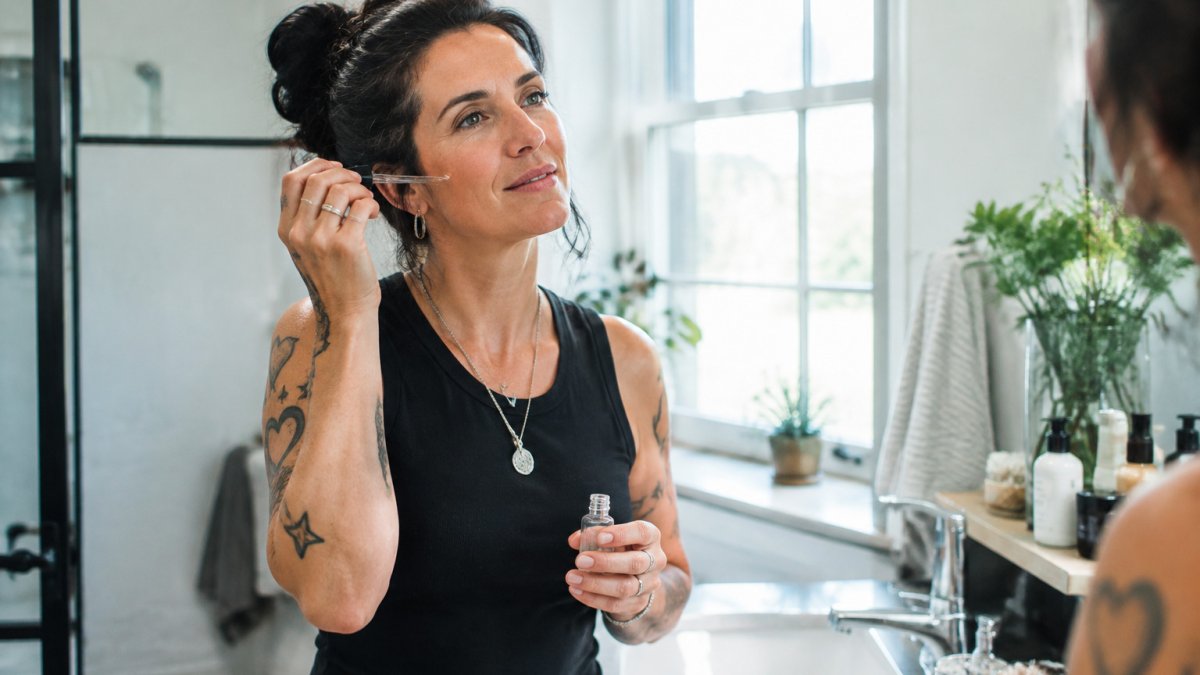
The best routine is the one you'll do every day. Keep it to four steps:
- Cleanse gently in the morning and at night, using lukewarm water.
- Treat with one active that matches your main concern, such as a BHA for breakouts or a peptide serum for firmness.
- Moisturise while your skin is still slightly damp to lock in hydration.
- Apply SPF 30 or higher every morning, even on cloudy days.
Once you've settled on a routine, give it at least six weeks before judging results. Changing products every few days only confuses your skin and your budget.
Lifestyle Factors and What the Evidence Says
Skincare works best alongside sensible habits. Sleep, hydration and a diet rich in vegetables and healthy fats all support skin health, though none of them replaces a good barrier routine. Cancer Council Australia guidance on sun protection is a reliable reference for daily sun protection, which remains one of the most effective ways to protect ageing skin.
Stress and disrupted sleep can also make skin look dull and reactive. Small, realistic changes tend to stick better than dramatic overhauls.
Your Next Step: Build a Routine That Fits Your Skin
Pick the one symptom that bothers you most, choose a gentle product for it, and commit to it for six weeks. Your skin is changing, but it still responds to consistent, well-chosen care. Dead Tired Club makes skincare for women who have lived loud and still want to look and feel like themselves, so start with the product that matches your concern and build from there.
If symptoms are hitting you hard, it's always smart to speak to an expert via our friends at UnPause.com.au. Dead Tired Club does not provide medical advice.
Frequently Asked Questions
How does declining oestrogen affect your skin?
As levels fall during perimenopause and menopause, many women notice the skin feeling drier, thinner and less bouncy, and sometimes more reactive. These changes are common rather than a personal failing. A gentle routine built around hydration and barrier support usually makes the biggest difference first, and it is worth keeping track of what changes and when.
Which skincare ingredients help dry skin during perimenopause?
Humectants such as glycerin and hyaluronate draw water into the skin, while emollients and lipids help seal it in and support the barrier. Niacinamide is often included in routines for tone and barrier comfort. Look for fragrance-free formulas if your skin stings easily. Start with one new product at a time so you can notice how your skin responds before adding anything else to your routine.
Why am I breaking out along my jawline in perimenopause?
Hormonal shifts can bring breakouts along the jaw and chin, sometimes decades after your teenage years. Salicylic acid is an exfoliant that can work inside the pore, and it is a common choice for this kind of congestion. Introduce it slowly, every second day at first, and wear sunscreen in the daytime. If breakouts are painful or spreading, speak to a health professional.
When should I speak to a health professional about a skin change?
It is worth seeing a doctor or dermatologist if a skin change is painful, bleeding, spreading, or if a mole, patch or sore is changing shape, colour or size, or does not heal. Anything that worries you deserves a proper check, regardless of age or hormones. If symptoms are hitting you hard, it's always smart to speak to an expert via our friends at UnPause.com.au. Dead Tired Club does not provide medical advice.
